Posts from the “Social media” Category

Democracy and Social Media

I’m trying to connect the dots on a couple of stories that appeared today in the Washington Post.

jokerThe first was about the wolf shirt phenomenon on Amazon. Mike Musgrove writes about how CollegeHumor.com and bloggers gamed the system to make an otherwise hideous t-shirt one of the top purchases on Amazon.

This type of online rabble-rousing appears to be catching on more than ever over the past year, said Tim Hwang, the organizer of ROFLCon, a convention dedicated to celebrating Internet memes. After all, another Web-based prank crossed over into the real world just last month when a 21-year-old college student, known by the online moniker “m00t,” sailed to the top of Time’s “most influential person” list in an online poll, beating out the likes of President Obama and Oprah Winfrey. Gathering nearly 17 million votes, the world’s “most influential” person is the founder of another jokey Web culture site, 4chan.org, whose proprietor is known offline by the name Christopher Poole.

So we know that the social media stuff can be gamed.  No big deal.  Just like in the old days!  Back then it was Hearst and yellow journalism.  Now it is some folks getting a good laugh.

Parenthetically, I’ll take the latter over the former.

Then – later in the A section – which is pretty much the entire serious news part of the Washington Post these days — there’s a story about how the Obama Administration is remaking the U.S. government’s online presence.

US.gov meet Amazon.com.

Don’t tell the CollegeHumor.com folks.  We all might be trading tax dollars for wolf t-shirts.

Government meets social media.  This is a good thing, right?
Assessing Brand Obama: The “Dog Year” Presidency

Recently I was asked to provide thought and commentary on President Obama’s first one hundred days in office.  The discussion takes place in Boston at an advisory board meeting this Friday.

I thought I’d use the Juice Bar as a handy note pad to jot down thoughts and float some trial balloons.

Let’s start with the unusual.  Typically people do that last.  You know … tell a joke, set the stage, identify the commonalities, cite historical precedent, and then wind it all up with a handful of pithy observations and quotable quotes that are supposed to get people to say “hmm … never looked at it that way …”  (Or if you’re the cynical sort (like me) the close often seems to be trying to get people to say “damn … that’s one smart guy!” … but I digress)

So for this first foray, let’s discard all the presentation foreplay and do what my friend Bink Garrison suggests and “start backwards.”

Let’s start with questions …  questions that have been nagging me ever since I was given this assignment … and questions that suggest a conclusion or two about what is making the Obama presidency different.

Today’s questions is …

Where did the time go?

As I said, the topic suggested for this panel is “Obama’s First One Hundred Days.”  Notice something odd about that?

Yup.  You’re right!  President Obama is not close to being in office one hundred days.  I haven’t had the time to figure out when his “One Hundred Day” mark will be — but my guess is that it is sometime around Easter (BTW, Happy Mardi Gras!).

So why start talking now — in the dead of winter — about something that is not going to take place until Easter?  Is this advisory board of mine a bit goofy?  Not really.  Seems there are a lot of other people interested in discussing this topic well in advance of its actual occurrence.

Google “Obama’s First One Hundred Days” and you get nearly 71 million results (all in .23 seconds!).   For a guy that has been in office just a little over a month, President Obama already seems to many as comfortable as an old pair of jeans … so much so that folks are already writing the obituary of his first 100 days right after his first news conference.

Maybe it was the Democratic primary that wouldn’t die.

Maybe it is the effect of watching the nation’s economy and your personal wealth slowly but inexorably melt away.

Maybe it is the ubiquitous and inescapable media that takes any event and expands, extends, and makes a five second event last for five days.

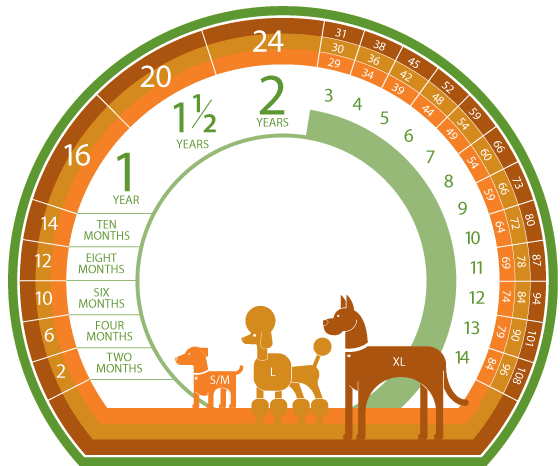
But the Obama presidency already seems like dog years — every day in real time seems like seven days to us normal humans.

Is New Media Helping or Hurting the Market Meltdown?

Are you scared?  No?  Then you must not be paying attention.

You must be living somewhere without electricity or access to the Internet.  (Which of course means you’re not reading this.)

So if you’re reading this I’m betting that you’re right there with everyone else.  Scared to the point of numb as you see your retirement, savings,  personal finance and everything else that once had a value in dollars disappear literally over night.

I see a new MasterCard ad.

Retirement savings portfolio:  Zero dollars.  Home equity:  Zero dollars.   U.S. Government’s Social Security payments:  Zero dollars.

A secure store room with water, canned goods, and ammo?

Priceless.

So here’s my question.

Has the increased velocity of news and information helped accelerate the meltdown?  Are we so surrounded now with an incessant barrage of bad news that new media is helping push us over the edge into crazed panic?

Or has the ubiquity of instant information beeen a break on what would otherwise by now have been a complete implosion of economic activity?

Is there ANY relationship between the historic meltdown of the stock market and new media?

Aaron Brazell had it right.  “Fear breeds a lack of confidence. A lack of confidence breeds fear.”

And the interconnectedness of the new media means that ANYTHING — including fear — can be transmitted easier, quicker, and cheaper.

So the quote in Bloomberg.com reads:

“This is what happens when the contagion of fear spreads,” said Quincy Krosby, who helps manage about $380 billion as chief investment strategist at the Hartford in Hartford, Connecticut. “No one is paying attention to fundamentals. People are very, very scared. Ultimately investors decide to sell.”

Used to be bad news was confined to the newspapers.  Now it follows me on my cell phone.  This is the flip side of the all the benefits of new media.  YOU CAN’T GET AWAY FROM IT!

Almost makes you yearn for the town cryer.  Or just yearn to cry.

The Anti-Web Site Web Site

Check out Modernista! They are the advertising agency behind such brands as Hummer, Cadillac, and TIAA-CREF.

Modernista!’s non-site-site was brought to my attention by Bill Mount of Trephine Inc. via John Brodeur, both of whom are working on the new web site for the agency I work for, approporiately called, Brodeur.

In the words of Bill, Modernista! may have …

… created the first ‘siteless website’ and, in so doing, have sent the message that these are people for whom unconventional thinking is like breathing (they didn’t say ‘we’re unconventional’, they proved it in th every form of their communication). They ‘simply’ appropriated parts of the web that everybody’s already familiar with and used them to tell the Modernista! story:

* About us is on Wikipedia
* Leadership team bios are on Facebook
* The TV reel is on YouTube
* The Print Portfolio is on Flicker.

And it is all bound together by a discreet, little red banner in the upper left corner of your browser. Damn! I mean, seriously. Damn!

I don’t know if Brodeur’s going to have a “siteless website” but the Modernista! approach shows the power .. and the logical extension? .. of true social media.

I agree with Bill.

Damn!