Posts from the “Uncategorized” Category

When we promote …

Promotions. We’re talking about people, not product.

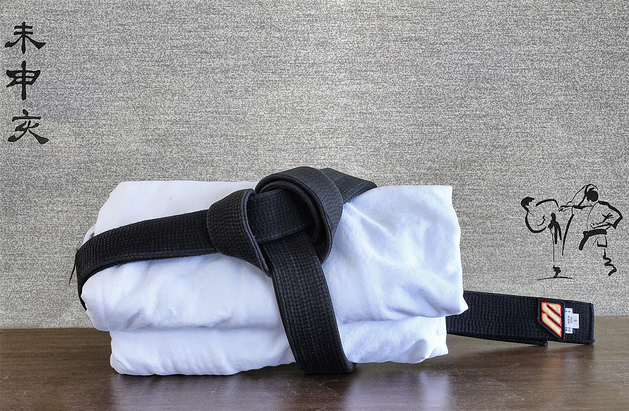
I recently went through promotions at my work and at my avocation. My work is marketing communications business. My avocation is Karate.

At work, we have annual performance reviews. There is the question of whether you promote a person to a higher level of responsibility, higher pay and perhaps a new title.

At most martial arts schools, it is different. I’ve taught Karate at Williams Martial Arts and Fitness for over twenty years. Opportunities for promotions are more frequent than annual reviews at work. Here they can happen  every other month or quarter. Students complete their routines and are tested on the mat.  Then there is the ceremony itself – a formalism and public pageantry which would likely be illegal in today’s workplace setting. Parents and friends are there to watch.

And as we award the karate-ka the next ranking and perhaps even a new belt, we state the following:

you are hereby awarded the rank of [X] kyu in the art of karate-do in recognition of the great progress you have made by your diligent study of the art … it is our wish that you will endeavor to attain a higher standard in the future …”

I have said it so many times I can recite it by memory.  As I think about those words, I think about what those outside of the martial arts world – those in the business world – could learn about the true meaning of meriting  a “promotion.”

First, there is the “great progress you have made …”

This is something most would agree. We should promote after, not before.  Progress first, promotion after. Too often we convince ourselves that we “see promise” in someone and promote them in hope that our hunch is on mark.  My experience in business is that too often our hunch is wrong.  For my Marine-trained sensei, it is simple.  First show that you have the skills for the next rank. But not just that. Show that you have the ability sustain those skills over time. Then, and only then, are you granted the promotion.

Second, there is the person’s “diligent study of the art …”

We promote in recognition of work. It is commendable that someone has been around for awhile. They’ve stayed the course. Loyalty is important. But true promotion should be an outgrowth of effort, not tenure.

Finally, there is the person’s “endeavor to attain a higher standard in the future …”

With this, I’ve likely crossed the border both of what is politically correct and what is HR compliant. In the martial arts world, you promote based on evidence that the person seeks to improve his or her station. They have to exhibit some desire to advance the art – the desire to not only improve their own skills but also the skills of others.

We could learn from that. You can make progress. You can work hard. But if someone doesn’t want to get better and is completely content to stay where they are and not move to a greater level of both skill and responsibility, is a promotion really merited? I don’t think so.

Three simple standards.  You’ve made progress. You’ve worked hard. You want to do better.

That, to me, is a reasonable standard for a promotion.

Whether you are in the dojo or the workplace.
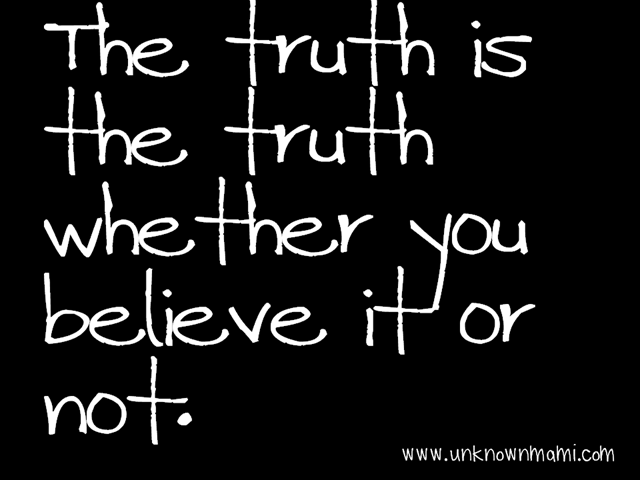
Truth Takes a Beating … But No Lie Lives Forever

In the famous exchange between Jesus of Nazareth and the Roman ruler Pontius Pilate, Jesus is recorded as claiming “everyone on the side of truth, listens to me.” Pilate dismissively responds, “What is truth?” and walks out of the room.

Truth.

It has never been very popular.  It is taking a particular beating these days.  Consider this:

Two years ago Twitter said that 23 million of its 271 million users were not people, but “bots” – programs that automatically generate content based on an algorithm.

According to BuzzFeed founder, Craig Silverman, during the recent election, “fake news” was more popular than “real news.”  Total Facebook engagement with the top twenty “fake news” election stories was greater than the top twenty “real news” stories.

According to the independent, Pulitzer-prize winning watchdog organization PolitiFact, 70 percent of the U.S. president-elect’s campaign statements were rated as Mostly False, False or Pants on Fire False. And he won!

But it is not just a campaign thing.  Recently we’ve seen Volkswagen claim their diesel engines to be environmentally friendly. But they weren’t. There was the Toshiba executive who said they made an extra $2 billion in earnings. But they didn’t. And then there was Wells Fargo who gave extra credit cards.  Without asking.

Truth isn’t popular. It exposes you to seeing and hearing things you don’t like.

  • That you are not perfect.
  • That you are oftentimes wrong.
  • That you make mistakes.
  • That sometimes you hurt people – maybe many.
  • That whatever it is, most of the time it’s not about you.

We don’t like Truth. So we avoid it. We cover it up. We change the subject. 

We won’t admit to lying.  That would be wrong (lying that is). So we give lying a different name.  We call it “fake news.”  Or the latest, “alternative facts.” 

What are they?  Truthfully?  They are lies.

But don’t despair.

Truth has an annoying way of hanging around. Just when you think you’ve beaten it, killed it and buried it … Truth shows up. Maybe not the next day.  Or the next. But one day.

And at some point, things either are or are not.  No amount of prevarication or mendacity can prevent Truth from having the last word.

I’m betting on truth.  It might lose a battle or two but it always wins the war.

Martin Luther King Jr. was fond of quoting Thomas Carlyle who wrote “No lie can live forever!”

That, I believe, is true.

Gratitude.

Gratitude.

It can change your brain.

It can make you healthy.

It can make you happy.

But if you buy into gratitude for those reasons, I think you’re missing the point. You may not even be expressing “true” gratitude at all.

Gratitude has been defined as the “readiness to show appreciation for and to return kindness.” I like that. Recognizing and returning kindness. We often talk about the former – recognizing. We rarely think of the latter – returning. Gratitude goes beyond acknowledgment. It is an obligation – no, a true desire – to be compassionate towards others.

Today is Thanksgiving Day. One of my favorite holidays. I know there are the banal and commercial elements surrounding Thanksgiving’s origin, propagation and celebration. But let’s set the storefront parade, football games, and Black Friday aside for a moment and think of what it means to be truly thankful.

The beauty of thankfulness is that it is something that everyone can enjoy. From the most popular, affluent and talented to the forgotten, impoverished and plain. Thankfulness is accessible to anyone regardless of origin, condition, and belief. To be sure, gratitude is much more difficult for some than others. Hard for someone in Aleppo to be thankful. Or those who suffer from illness. Or those who have lost jobs, possessions, health, loved ones … perhaps even themselves. But gratitude isn’t comparative. It is not about being thankful that you’re not like the other. It is about being thankful for who you are what others have done for you regardless of station. It is about showing appreciation for others and their acts of kindness both large and small.

I have been blessed beyond merit because I’ve merited little. So thanks. Thanks to all of you out there who have looked past my and others’ faults and have shown grace and kindness.

Thanks to those who’ve suffered through much and still persevere. Thanks for another day to try and the opportunity to do something – even a small thing – that makes things better. Let’s try to be thankful not for the sake of how it might help our brain, our health, or our happiness. But let’s be thankful because it is a proper response to the life we’ve been given.

Happy Thanksgiving.


Christian faith and the U.S. Presidential Election

Christian argument for trump

We’re at the height (and fortunately the end!) of a very divisive and contentious political campaign.  People who know me, likely know how I will vote. More about that later. 

Mr. Trump has sought the support of notable leaders of evangelical Christian institutions and organizations.  I’ve listened to Jerry Fallwell Jr.  I’ve read Wayne Gruden.  I have watched Ralph Reed and Kenneth Copeland. 

I am a Christian. I respect anyone’s decision as an individual to support and campaign for any candidate, including Mr. Trump. My only ask is this:

  • Campaign for Trump because you believe in his ability to execute sound economic policy.  Because you believe people need a tax brake and deregulation of Wall Street.
  • Campaign for Trump because you believe in his positions on social policy, on abortion and gay marriage, on building a wall, on education.
  • Campaign for Trump because you believe his views on environmental policy, on energy and fossil fuel, that climate change is a fraud.
  • Campaign for Trump because you believe in his ability to execute foreign policy, on dealing with ISIS and terrorism, on dealing with trade partners.
  • Campaign for Trump because you believe his character, professionalism, and leadership is best suited to unite and lead this country.

But for the sake of the Christian church and the faithful, I’d ask that you not suggest that it was Jesus, the Bible, or any tenants of Christian faith that led you or others to support Donald Trump. 

Personally, I cannot reconcile the scriptures and my Christian faith with candidate Trump or the Trump campaign.

  • I believe in a body of Christ that includes right and left, conservatives and liberals, Republicans and Democrats, white and black, majority and minority. 
  • I believe in a body of Christ that loves mercy, seeks justice, but most of all walks humbly with God.  It is a body of Christ that loves its neighbor as itself. 
  • I believe in a body of Christ that is oriented not toward the healthy, wealthy and well off, but to the ill, the poor, and the disadvantaged – the harlots, the lepers, and yes, even tax collectors.
  • I believe in a body of Christ that is humble, poor in spirit, and merciful.
  • I believe in a body of Christ that has no need for candidates or political parties, just the acceptance of grace and the dedication of service.
  • I believe in a body of Christ that flourishes when it transcends politics and is corrupted when it stoops to it.

Jesus didn’t campaign for candidates. Indeed, Jesus’ sharpest commentary was not for the Roman government or its bureaucrats. His most caustic rebukes weren’t even for his civilian executor Pontius Pilate.   Jesus’ most stinging commentary was for the leaders of the church at the time, most of whom were focused more on rules, laws and regulations and … yes, politics! … than they were of the material and spiritual needs of those they were meant to serve.

I’m a Christian.  Like all Christians, I’m deeply flawed but redeemed through Christ’s sacrifice and God’s grace. So for those of you who are Christians and are voting for Trump, I’m not here to tell or lecture you that this is or is not in line with our faith. A political choice is just that – a political choice.

I can’t reconcile the scriptures and Christian faith with candidate Trump.

I will vote for Hillary Clinton. I dont’ know Hillary Clinton, but I’m fortunate to know many people who do. To a person they have – while recognizing her flaws – say that she is a decent, earnest, hard-working, and faithful public servant. They describe her Christian faith as longstanding and unwavering.

But with that, I’m not going to suggest that my vote is God’s will. I’m not even going to suggest that God “needs” my vote for one candidate or the other.  My God is bigger than that.

My God’s Providence and Dominion will certainly prevail regardless of whether I show up or not on voting day.

But show up I will.

My best friend framed this properly.  He said it was a matter of identifying dependent and independent variables. Is my candidate a function of my faith values? Or do I chose my candidate based on my personal desires and then contort my religious convictions to support that choice?

In the words of President Lincoln, “my concern is not whether God is on our side; my greatest concern is to be on God’s side, for God is always right.”

Courthouse

gavel

Recently I spent a day at the Fairfax County Courthouse. Six months ago a couple of young kids in the neighborhood stole my briefcase. I had left it in the car, unlocked. Shame on me. Police found the briefcase bereft of the easily sold electronics.  The police also (eventually) found the two boys. They were being tried in juvenile court.  In Fairfax County victims are subpoenaed to testify. So I came, though I never made it into the courtroom.  The defendants settled before they ever had a trial. Two counts, felony theft.

So I spent the day sitting and watching.

Life plays out hard in Juvenile Court.  There are the defiant and presumably ‘don’t care’ teens that sit stone faced and sullen next to parents and guardians.  There are the anxious adults who lean into conversations across from detectives and lawyers. Then there are children.  The little ones who sit, squirm, fidget and sometime get loud, oblivious to the nature of their surroundings or the consequences of what might happen next.   

Blue collars far outnumber white collars in Juvenile Court. You see uniforms of the working class … maids, gardeners, medical assistants, and construction workers.  But mostly you see moms, anxious and bewildered moms wondering how they got here, what is going to happen to their child, and what, if anything, they can do about it.

The lawyers match their clients.  They wear Burlington Coat Factory suits. They walk in scruffy shoes.  They write with BIC pens. They seem like earnest people.  There are the jaded comments, of course. “Can you believe what this dumb kid did … ? Then this girl got up and …”.  I would not characterize the comments as harmless, but they seemed to betray more befuddlement than condemnation.

Every now and then there’s a nod of respect.  I heard a detective marvel at the ingenuity of two teenagers who were able to dislodge an ATM machine from a small strip mall and haul it home via a stolen golf cart.  “You gotta hand it to them,” he said. There was nodding around the table. 

These are the public defenders and social workers that see the burglaries, the drug deals, and the petty and sometimes serious crimes every day. They’re not the sophisticated crimes of television.  

But most of what you see or hear is the sad stuff. The stupid crimes.  The careless crimes.  The unnecessary crimes.  All the more stupid because they risk the life trajectory of a young teenager.  They are someone’s child.  But that “someone” becomes unclear for a moment. Then things go wrong. So they end up in Juvenile Court.

The Courthouse is a place of anxiety. The atmosphere is one of anticipation. But not the anticipation of victory.  Rather anticipation of a decision that will either provide relief (often temporary) or continued sadness.

It is a place of contrasts. There are those who make the decisions and those who follow and are affected by them.  There are those with authority and those who must submit to that authority.  There are the burly police, the armed guards, the detectives and prosecutors … Then there are the haggard parents, the scared and sometimes insolent children, the bewildered immigrant families.

But most of all, it is a place of consequences. It is a place of harvest. But not the kind we celebrate at Thanksgiving.  Actions have consequences. The courthouse reaps the behaviors that individuals and societies have sowed. It is part justice, part karma. But a better metaphor might be a force of nature. The Courthouse is like gravity. When something is pushed off a ledge or let go, it falls.

People fall too. And when they fall, they end up here.

Imagination

 imagine maik_sv
“I just can’t imagine …”


That, my friends, is the problem.  We don’t imagine, and when we don’t imagine, we don’t do.  Imagining and imagination are a critical first step to change.  Imagination is what enables us to make something that is foreign or non-existent relevant in our lives.  It is through imagination that we are able to “see” what is possible and in internalizing possibilities, we make new things happen, both in ourselves and in others.


I won’t do the obvious.  That is, I’m not going to quote that song by John Lennon.  (And BTW, I don’t think all the things he wanted us to imagine would be necessarily a good thing.) But I do think he hit on something that many great people have in common. And I’m talking about everyday great people, not just the famous ones. They have an imagination.  In fact, I suspect that it might even be impossible to do great things, unless one submits, indulges or engages the imagination.


I was reminded of the power of imagination at a recent lecture on hypnotherapy.  (My wife is a therapist and this was part of her continuing education classes.) The instructors had studied under Milton Erickson, considered one of the godfathers of medical hypnosis and therapy. They noted that hypnosis is typically used in therapy is to help someone change some behavioral challenge, often an addiction, disorder of fear.


They noted that the reason hypnosis can promote behavior in individuals lies in the simple fact that “imagination is more powerful than will.”  In many respects, that is what hypnotherapy is all about: enabling people to imagine themselves or others differently.


People set goals. They muster will power.  They make resolutions.  They join support groups. They feel they can “muscle” their way through.  But then they find they can’t.  Why?


Because despite all of our willpower (or lack thereof), somewhere deep in our subconscious we are not able to muster up the idea that we can actually do things like quitting smoking or over-eating or easing anxiety.  Too often we lack the idea of the possible.  We lack the ability to truly imagine and believe that life could be other than what it is.  And so we end up back in the life they’ve learned to expect for ourselves.


Great things, great accomplishments, require imagining they can be. It is not just thinking big.  It is the ability to see, and see clearly, a different path. I believe that was what Rev. Martin Luther King, meant when he said he had a dream. Because in imagining and dreaming he was able to take those first steps to change.


But let’s not just use our imagination to simply help ourselves accomplish the things willpower can’t.


Let’s help others imagine those things that willpower alone won’t allow them to do.


Imagination can be contagious.  And liberating.  And when it spreads, everyone is better for it.


Imagine via flickr under cc 2.0

Ruminations

Thoughts from a laundromat


I ruminate a lot.  I’m pretty sure this isn’t a good thing.


One definition of “to ruminate” is “to think deeply.”  But another definition is “to chew one’s cud.” I think a lot of my ruminations fall into the latter.  The “chew your cud” category.


My mind is a lot like the front-loading dryer we have downstairs.  You stuff it with ideas – or in the case of the dryer, wet clothes – and you hit “spin.”  And off it goes!


 All those things – ideas, worries, plans, thoughts, concerns, mysteries, relationships – all tossing around my head like a mess of socks, underwear, t-shirts, jeans, and the occasional pair of Tom’s shoes. ‘Round and ‘round and ‘round.  There’s the whirring and modestly rhythmic sound of buttons and zippers clicking and clacking.  Then the occasional “clunk” and “thud” of those Tom’s shoes.  Bedump! Bedump! Bedump!


And then something happens.  I forget for a moment.  I go upstairs to watch a football game.  Maybe go for a run.  Take a nap. Have a meal.  A glass of wine.  Maybe two.


But eventually I find myself back at the downstairs front-loading dryer.  I see that the clothes have stopped spinning.  They’ve been sitting there for awhile actually.  An afternoon?  A day? A week? So I pull out a polo shirt.  And I realize that it is one crumpled, wrinkled mess. Hideous.  I can’t wear that! I can’t even fold it up.


So I do what any other person too lazy to iron clothes will do.


I turn on the dryer again.  And back they go.  All those things I think about.  Ideas, worries, plans, thoughts, concerns, mysteries, relationships.


‘Round and ‘round and ‘round.  Bedump! Bedump! Bedump!
Thoughts at the laundromat via flickr under CC 2.0

Deserve

Nice to see you

“How are you?”

It is perhaps the most asked question in life. It is a question asked between everyone from common strangers to  intimate family members.

Think about it. How many times a day are you asked “how are you?”  Now count the number of times a day you ask that of others. “How are you?”

In some rare cases we actually want to know the answer!  But most times not. It is just a thing we say. And nine times out of ten we get the standard response.

“Fine.”

Occasionally we’ll get a “great” or “awful” which often is very problematic because we then feel obliged to follow up as to  “why” and are now committed to having a real conversation which we never intended to have because we really didn’t care how they were doing we were just using as a placeholder for hello.

“How are you?”

I recently started an experiment. When asked “how are you?” I started to respond with a phrase I often heard  my father say and it went like this, “Well, I’m doing better than I deserve.”

This really throws people off.  It is not the ordinary “fine”  and has the effect of causing people to think and react.  Typically, reactions fall into one or two camps.

There’s the group that will challenge the “better than I deserve” response.  Sometimes quite forcefully.

Now I’m sure most of those who object to the unusual “better than I deserve” response to the standard “how ya doing?” question are well meaning, well intentioned and wanting to be helpful and supportive.  They see (or hear!) the “better than I deserve” phrase as one of despondency. I sense they interpret it as someone who questions their own self worth and so is in need of a bit of affirmation. Their response seems to be …

“Oh that’s not true.  I don’t know you but you seem like a nice enough guy.  I’m sure you’re deserving of a lot of good things. I know that I am.  Everybody is deserving of good things.  So cheer up!  Take a little credit for yourself!  Run a victory lap and be proud of all the good things that are happening to you.”

Then there are those that “get it.”  At least get it in the sense of what my Dad originally meant.

For him the “better than I deserve” response was an expression of gratitude. We have so much, even when we have little.  We are so blessed, even when things are pretty crappy.  Just the joy of “being” and experiencing life is an undeserved privilege.And then there are all the stupid, silly and sometimes downright mean and awful  things that we’ve done that we have somehow gotten away with! If we were all accountable for everything we did and got what we “deserved” for the completely dumb things we do I doubt many of us would survive past our teens!

I know that is true for me.

I remember complaining to my Dad once that “life isn’t fair!”  I will always remember his response.  “You better be glad, son, that life isn’t fair.  Because if we all got what we deserved we’d be in big trouble!”

Months ago, my daughter wrote down the toast she made at her little sister’s wedding. It has been by far the most popular and widely read thing on the Juicebar.  Ever. It was about expectations and the joy of not having any (expectations, that is). Seeing everything, good, bad, and indifferent, as a blessing.

So if you ask “how are you?” and if I respond “better than I deserve,” know that I believe this to be a very, very good thing.

Nice to see you” by Just Ard is licensed under CC BY 2.0

Expectations

M and S copy crop

This past weekend my youngest daughter was married.  It was a wonderful ceremony for a very special couple.

As with many marriage ceremonies there were the typical highlights.  I got to walk my little girl down the aisle.  I gave her to her new husband.  I watched them take their vows.  I saw them introduced as one.

But another highlight was watching my oldest daughter, Sarah, give what I thought was the most tender, loving and insightful toast to her little sister.  I was so moved, I asked her to write it down (being the actor that she is, she operated without a script).

Here’s what she said:

When I googled How to give a Wedding Speech I was told I was supposed to introduce myself.

So, I’m Sarah, sister to Michelle and Jesse, daughter of Jerry and Sanderijn, wife of Jeffrey and mother to three sons.  And now, I am Elan’s sister-in-law, too.
Actually, in the past 10 years I’ve been the one introducing people into our family either by marriage or birth so I would like to take a moment to thank Michelle for helping me out on that.  I can only have so many kids.

Michelle and Elan, as this is your wedding, you will hear a lot of advice about marriage.  Last night at the rehearsal dinner we talked a little bit about marriage advice, and I said I was saving mine for today:

I will start with a quote from Barry Schwartz: “The key to happiness is low expectations”

Well, I’m not going to go that far.  But I think the key to a happy marriage is actually no expectations.

You see, marriage isn’t what you expect it to be.

Marriage, is fluid, it changes.  Just like you are fluid, and you change. You may find yourself waking up one morning thinking that marriage isn’t what you thought it would be… but that is okay, that’s good.  Marriage has stages just like you do, and if you let it, it becomes what it needs to be at that time.

When you set your expectations on your marriage and each other, you limit each other, you don’t allow each other to grow, you don’t allow your marriage to grow,  and you don’t allow each other to change together.

So, love each other without expectation, be kind to each other without expectation and care for each other without expectation, and then you can see how wonderful marriage can be.

Because it is when you have no expectations, that your life together and marriage will exceed even your wildest expectations.

As I listened to my daughter’s sage advice, only one word came to mind.

Amen!


Dad

My dad

A story about my father on Father’s Day.

I was seventeen and wanted to buy a Fender Rhodes electric piano.  One problem.  I didn’t have the cash to buy it outright.  And since I wasn’t eighteen I’d need Dad to sign the papers so I could finance the purchase.

Know this.  I was a hard worker.  The day I turned 15 I started working as a stock boy in the linen department of the Maison Blanche just up the road from East Jefferson High School.  I took other jobs too.  Worked at a health club out at the lake front.  Worked as a greenskeeper at City Park Golf couse.  I was no slouch.  I was a hard worker.  At least I felt I was.

I remember making my case.  I forget whether it was at home or in the car.  That was where my Dad and I had a lot of our best conversations – either in the den of our house with Dad on the LazyBoy and me on the rattan couch or the two of us sitting (unbuckled) on the felt bench seat of a Ford Fairlane.

I laid it all out.  I had nearly one hundred dollars, good for well over twenty percent of the purchase price.  How I’d save money over the coming months and make the monthly payment.  How I’d finance the ongoing expenses.  How I’d save for this and spend for that.

I was thorough.  I was confident.  I had it all figured out.

I could tell Dad was genuinely interested in what I was saying.  He wasn’t much interested in the substance of it all but seemed fascinated in what I was trying to accomplish, and how I thought I could make it work.  But Dad, being Dad, couldn’t help but probe and test in a number of different areas.

Did I really think that spending all this for an electric piano was the best thing I could do with the money?  Were there any other alternatives?  Would I actually follow up and dedicate time to playing the piano and making it all pay off?  Did I really think there was any future or benefit in playing in a band?  Would I devote time and energy to make it successful?  And if I thought I could, how was I going to do that and still work, be a member of umpteen social organizations, stay on the high school golf team and meet the other obligations that I already was having a hard time meeting?

As usual, Dad was cutting to the heart of issues I was ill prepared for.

And the more Dad pushed, prodded and probed the more testy I became.  Finally, there seemed to be nothing left of the logic or practicality of my plan.  My beloved Fender Rhodes was quickly becoming an empty, silly, foolish exercise.  So I blurted out:

“Look, Dad, I’m paying for all this.  It is my money and it is what I want to do.  I’m paying for it.  I’m working for it.  I’m not asking you for a handout.  Besides, it is not going to cost you anything.”

Dad smiled.  Dad smiled a grin that at the same time expressed both admiration and pity.

I could tell that he was delighted by my drive and independence.  But I also knew from his face that he was disappointed that I was missing something very fundamental.  There was something I wasn’t getting.  Something very basic that Dad had hoped I would understand, but I didn’t.

Dad went quiet.

Then he smiled at me and said in a very deliberate but kind and loving tone.

“Son, let me explain something to you.  It is all my money. 

I’m not saying that to make you feel bad, or to make me feel good.  It is just the way it is.

You may think that you’d be paying for this.  That’s not quite right.  Whatever you spend, your Mom and I have to make up for somewhere else.  Whatever you spend on this is money that you don’t spend on something else … car insurance, school expenses, clothes … the list can get pretty long.

Now I want to help.   I admire that you want to work and earn and save money to make it happen.  But don’t ever think that when you spend money on something like this it isn’t costing other people money.  It is.  It always does.

One of the biggest mistakes is to think you are independent, that what you do doesn’t affect someone else.  It does.  Especially when it comes to family, time and money.  Because what you spend in one place, is something that you don’t spend in another place.  It’s all one. 

Of course Dad was right.  I wasn’t close to being self-sufficient.  And our family wasn’t wealthy.  I was a young, dependent child with the fantasy of making one transaction “independent” of everything else.  It doesn’t work that way.

My Dad’s line – it is ALL my money – taught me a lot about life.  It was a recognition that things are always more linked and related than people think.  People imagine being able to isolate or compartmentalize themselves and their actions.  Being “ownable” only to themselves.  It doesn’t work that way.  One action almost always impacts or influences something else.

Dad had the same view about family and faith.

Family is recognizing that everything you do affects the family members around you.  Everything.

And faith means that every day is a gift not a right; every action, a blessing not an achievement.

Thanks, Dad.