Posts from the “Uncategorized” Category

Wonder

wonder

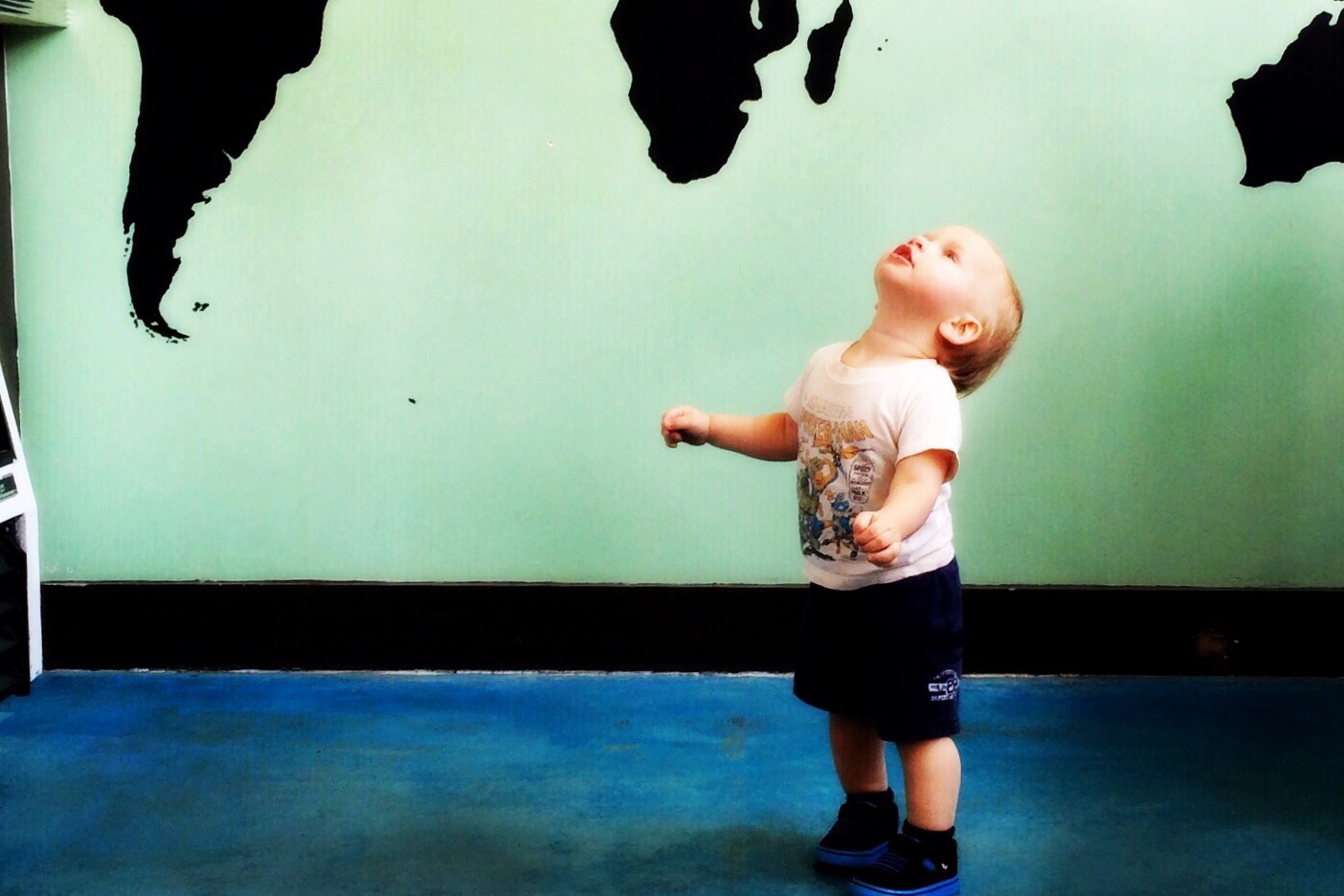
Yesterday I came home and went for a walk with my one-year-old grandson, Marlowe.

In the next 90 minutes Marlowe reacquainted me with something we all had once and have, to our detriment, lost.

Wonder!

It took us about fifteen minutes to navigate the stoop down to the sidewalk.  Marlowe’s better at going up stairs than down them.  But it wasn’t that it.  There was an iron handrail that he had to grab.  He stopped and tugged on it a bit.  Slid his hand down the cool metal.  Gave it a big whack a couple of times.  Then he turned to look at me with a big toothy grin.

Wow!

I’d never seen anyone appreciate and marvel at a simple metal hand rail like that.

We ambled down the sidewalk.  We stopped at a patch of grass and I showed Marlow how you can pluck a blade and roll it between your fingers.  And for the next fifteen minutes that is exactly what we did.  For Marlowe, each tug, each blade, each twist between his chubby fingers was an absolute joy.

Amazing!

He spotted some bird fiddling with the leaves and debris in a neighbor’s gutter.  His hand shot out and he pointed to the birds.  “BAH!” he said.  “Birds,” I replied.  “BAH!”  “BAH!”  “BAH!” he squealed.  Each was said with utter astonishment.  I’m sure it wasn’t the first time he saw a bird, but it sure seemed like it!  And so we sat for God knows how long, just looking at the birds punctuated occasionally by Marlowe’s “BAH!” after which he would turn to me with an expression that read, “Wow, Grandpa, did you see that?  Whoa!”

There were plenty of other adventures.  A branch became a broom and Marlowe intently and joyously learned how to knock things off the sidewalk with it.  Ants were this astounding phenomenon that we followed with glee and delight.

And every time he would look at me and his whole countenance could be captured in one word:  Amazing!

One of Louis C.K.’s more famous skits is called “Everything is amazing and nobody’s happy.”

I think why that skit became so popular is because it is true, and we know it to be true, and we’re somehow sad that we’ve lost that sense of simple wonder and delight that is the world around us.  We analyze and quantify and qualify everything until we have squeezed to death and blinded ourselves to the essential amazement that lies in just about everything.

In a recent lament, writer Anne Lamott said about our data-driven lives, “What this stuff steals is our aliveness,” … “Grids, spreadsheets and algorithms take away the sensory connection to our lives, where our feet are, what we’re seeing, all the raw materials of life, which by their very nature are disorganized.”
The world around us is truly amazing.  It is only when we approach it with curiosity and wonder that we really see it, and begin to relearn what it is to be human.

So thanks, Marlowe.  You’re truly amazing!  And so is everything else.
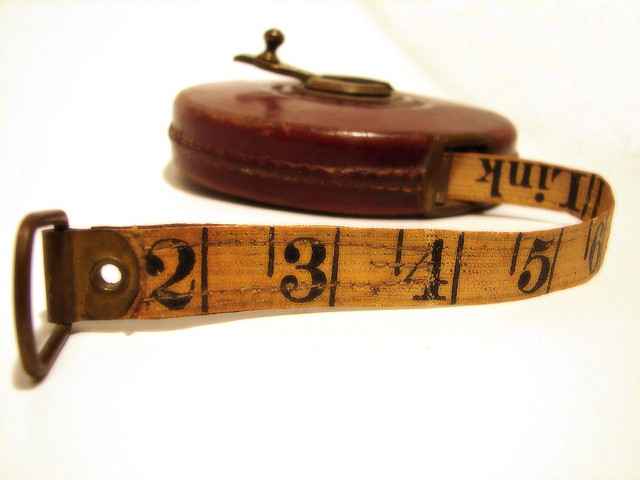
Measurement

measuringtime

A cup of flour, half a stick of butter, two tablespoons of sugar …

5’ wide and 20’ long with a drop of 2’ for every 7’ in length …

An increase in top-line revenue of $10 million with profit margins of 20% by …

Measurements.

Every part of life seems to have them. From cooking, to business, to home improvement.

I’m a planner. This means I’m in the business of the research behind communications campaigns. When I talk to clients there is the inevitable question: “How are we going to measure success?”  To which I almost always answer, “Define for me what you think success looks like and I’ll tell you.”

The answers vary. Some see success as getting the right headline in the right publication. Others talk about changing people’s opinions about certain things. Others about generating business and increasing sales. Some even suggest that “no news” is indeed the “best news.”

What is success? And once defined, can that be measured?

People ask that a lot.  And it is more difficult than you think.  Take the matter of education.

Recently I came across two articles in the same issue of the New York Times.  One dealt with primary and secondary schools and the debate over something called the Common Core.  These proposed “standards” (a word that is inherently dependent on the concept of “measurement”) have been so controversial that they’ve united both far left and far right in opposition.  A second, was about President Obama’s suggestion that colleges and universities be “measured” for their success.  Not surprisingly, college administrators were aghast.

Education.  Why can’t we measure it? We measure everything else. What makes education so special?

One the one hand it is pretty simple. At the end of the day, can the person read, write, calculate, reason, think?  If they can’t, then they haven’t gotten an education. They might have gone to school and gotten a lot of other things – a good experience, healthy relationships, perhaps even a healthier, stronger body; but they haven’t gotten an education.

On the other hand there are those who say that simply relying on how well a student does in the “three Rs” is too narrow an interpretation of the idea of “education.” That all that other stuff matters too.  It is just harder to measure.

The dilemma in measuring education is that you end up having to measure people.  And that’s not easy.

Unlike cooking, construction, and accounting, measuring things that are inherently human are, as we see, controversial. Why?  Because while measures of human characteristics can suggest things – they can be indicators – they always fall short of what it really means to be a human being. Things you can measure are part, but only part, of the human recipe.

People are more than numbers.  But, that doesn’t mean that numbers don’t mean anything.

We often associate poverty with unhappiness. But, I know poor people who are exceedingly happy.

We often associate illness with misery. But, I know ill people who are joyous and upbeat.

We often associate illiteracy with being stupid. But, I know of people who aren’t very articulate or book smart and are quite wise.

None of this means that things like poverty, illness, and illiteracy – all things you can measure -don’t matter. They do. They matter a lot, actually. It is just that we’re more than that.

How do you measure faith, hope and love? Because those are the things that make us human.

It is the immeasurable that is the most meaningful.


Photo via flickr

FITBIT

fitbit1-1380717408

RIP:  FitBit

I gave up.

My Fitbit band sits on my disheveled desk face down in the havoc that is my basement.  It is there with its plastic arms pointed emptily toward the sky like a dead bug one would find in a room corner.

Rest in peace.

My wrists are now bracelet free.  No more “tap, tap” to check on my status.  No more checking on my iPhone app for my daily step count.  No more waking up by wrist vibration.  (That last one was actually pretty cool.)

And I feel better for it.

I don’t know if FitBit will make it.  A lot of people like it and have fun with it.  But it didn’t work for me.

First, it told me things I already knew.  I would sit and pull up my FitBit data.  “You walked / ran a lot steps today!” it would report.  “Yup, knew that,” I thought.  Another day another check with the app.  “You didn’t do squat today,” it scolded.  “Yup, knew that,” I thought again.

I’m a pretty active guy.  I run, work out, stay pretty active.  I also am a modest work-a-holic.  I travel a lot.  I am forgetful but good with short-term memory.  I typically can recall what I did each day.  That is, I’m quite aware of how active I am.  At least I think I am.  FitBit wasn’t telling me anything that I couldn’t figure out with a few seconds of focused thought.

Second, FitBit didn’t give me any particularly insightful analysis as to why I was sedentary one day and hyper-active another.  Perhaps I was expecting too much.  But it would have been great if there was something there that said, “you know, every time you miss your morning run then you’ve a 50% chance of being a couch potato all day.”  Or something like that.   But again, that would be information that I could figure out without strapping an electrode to my wrist.  Fact is I already know that if I don’t do my morning run there’s a 50/50 chance there won’t be any workout in the afternoon.

Finally, I came to the realization that the wristband was more a lifestyle and fashion statement than health device.  At least for me.  I wore it because I thought it was a cool thing to do.  I guess it is.  But I also found it to be a pain in the ass.

Experts say that wearable technology – particularly wearable fitness technology – is the new, new thing.  I guess so.  They are experts, aren’t they?  But it so far isn’t working for me.  My observation is that these types of things work for those who are either very competitive or very complacent when it comes to fitness.  If you are competitive, you enjoy posting step counts on Facebook pages and challenging those “so you think you’re fit?” friends.  If you are complacent you need something like a string around your finger to get you to remember to do your workout.

I am both but would prefer not to have a machine constantly remind me.

Apologies


proper apologies

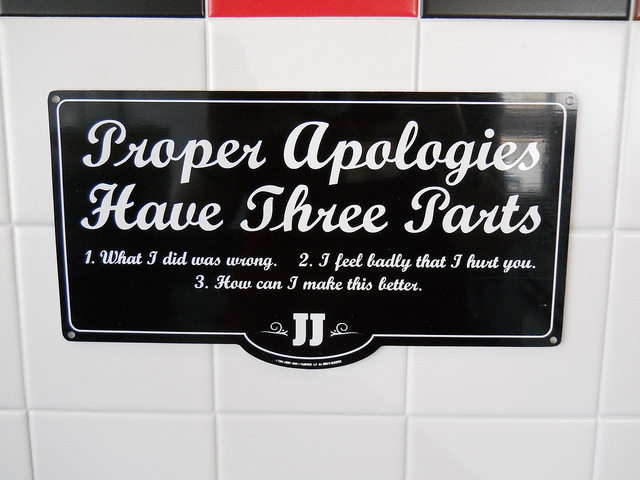
Something is happening to apologies.  I don’t find them as much as I used to.

A report will be late.  Something won’t get done.  Or it will get done incorrectly.  Someone says something harmful.  Or takes an inappropriate action.  And more often than not when I raise this with a person what I’ll get is a blank stare and an “OK.”  Maybe a question to the effect of “So what do you want me to do?”

Nothing wrong with a blank stare.  Nothing wrong with asking what I’d like them to do about it.

But no apology.

Am I asking too much?  I’m not asking anyone to grovel.  No need to tear your clothing and douse yourself in ashes.  Just makes me feel a bit better and give me a sense that you understand that you messed up.  Just so I know that you know.

So why are apologies disappearing?  I’ve got some theories.

First, they increasingly aren’t received well.  Apologies used to be viewed as the path toward forgiveness.  And forgiveness was the path back to wholeness and community.  Today, apologies are viewed less as the first step toward reconciliation and more as weakness.  That is, nowadays people often use someone’s genuine confession as a club to whack them upside the head.

All quite sad, really. I remember a rather infamous event at a business meeting when I apologized to a client for running late on a small and somewhat inconsequential element of a project, promising that we’d do double duty to catch up.  What I saw as a small acknowledgement sparked a client explosion.  He harangued me with a series of screams along the lines of “how can you …?” “how could you …?” “explain to me why …?”  “I demand an answer …!”  If that client was the only measure, I’d likely never apologize again.  The broader point is this: if apologies are disappearing perhaps it is because society isn’t embracing the apology as it ought.

Second, the apologies we do see are pathetic.  What apologies am I talking about?  Lance Armstrong.  Tiger Woods.  Paula Dean.  Anthony Wiener.  Need I say more?  Not exactly role models, eh?  If those were the only examples I had of a person apologizing, then I would never apologize either!

Finally, there may be a link between the decline in apologies and that of religion.  Let me explain.  A generation ago in the United States, religion was mainstream.  And as most of that was Judeo-Christian religion, there was a very common practice that most people learned through their weekly trip to the synagogue or church:  asking for forgiveness.  It was an apology of sorts.  It was a weekly recognition that you messed up.  In the Anglican tradition it was framed as messing up in “thought, word, and deed.”  And you asked God for forgiveness.  Then things are better.  You do that throughout your growing up and it becomes a habit.  A lot of young people today don’t benefit from that practice.

Whatever the reason, I’d ask that we bring back authentic apologies.  Let’s celebrate them, embrace them, reward them.

And if you think I’m way off.  If I have offended you, your faith, or your generation in any way.

I apologize.

Consequences

consequences

I read an article today in the New York Times on the budget standoff.  In justifying their position on insisting to attach conditions to a budget, Rep. Stephen King of Iowa said simply, “Because we’re right.”  His colleague, Steve Pearce of New Mexico went further to say, “At times, you must act on principle and not ask what cost, what are the chances of success.”

That phrase, “act on principle and not ask what cost” struck me.

Consequences exist.  Really.  They do.  I think that is where you have to start.  We all like to ignore them.  We pretend they aren’t there.  We forget about Newtonian physics (the old “equal and opposite” action thing).  We pass over the “reap what you sow” evidence.  But once we step out of our delusions, we look around and see, yes, there are consequences to things.

And consequences have, well, consequences.  Ignoring them doesn’t make them go away, nor does it necessarily make you a better person.  I find any one who would say, “I’m going to do what I think is right and I don’t care who gets hurt in the process” to be a potentially dangerous person.

That is what is so disturbing to me about Mr. Pearce’s comments.  It seems that he recognizes consequences but chooses to ignore them.

Now here’s my rule for ignoring consequences:  it should be for a greater good and the downside risks should only involve the person who chooses to ignore the consequence.  Some examples:

  • I’ll protect others even though I may get hurt.
  • I’ll provide for others even though it means suffering for me.
  • I’ll give to others even though it means I won’t be able to spend for myself.

It is the story of the soldier that lays down his life for his country.  It is the story of the philanthropist that gives his or her money away to help others.  And in the case of my faith, it is a God who sacrifices of himself for those whom He loves.

All good reasons to ignore consequences.

But to ignore consequences just because you are “right”?  Ignore consequences that could harm others and not yourself?  Ignore consequences because there are people encouraging you to do so without regard for others?

This isn’t “right”.  It is even beyond “wrong”.  It is an attitude that leads inevitably to very, very bad things.

Stressed

stress

Apparently we all are.  Stressed that is.  According to the American Psychological Association and the New York Times, “too much work, too little money and not enough opportunity for growth are stressing us out on the job.”

That would do it for me!

The research documents what we already know (actually, most research says what we already know but simply don’t have hard data to prove) – that everyone, everywhere, for all sorts of reasons are stressed.
There’s the normal stuff.  Like bills.  Those can be very stressful. ABC says medical bills are particularly stressful (this is a story? this is news!).  There are reports that those facing retirement are stressing out.  Specifically American are stressed over retirement savings.”  Guess why?  They’ve got none!  That certainly stresses me out.  Some reporters are claiming that White House Press Secretary Jay Carney is stressed out.  Again, I don’t see this as particularly surprising.

The sad news is that stress today impacts primarily the young, particularly young women.  This is important to me because all three of my children are young people and two of the three are women.

According to the American Psychological Association, if you’re under 30 you’re likely pretty stressed out.  According to Arianna Huffington you Millenials are “leading the stress parade.”  Not exactly a parade you want to be at the head of.

If you are a working woman below the age of 33 it gets worse.  Young women are the most stressed out group in America.  And why are women so bummed?  According to the study it is due to low wages, long hours and lack of opportunities for advancement.  I don’t know about you, but that would get me stressed.  Sadly, the result could be more women smoking cigarettes.  (Yet another study shows that while men smoke for enjoyment, women smoke to calm their nerves.)

Equality at home doesn’t seem to help.  The latest Pew Survey of American lifestyle says that moms and dads are sharing more duties, have greater “equality” (whatever that is) but guess what, we’re both (mom and dad) more stressed!

There is hope.  Scientists have developed a breathalyzer that will enable you to know when you are stressed.  And they’ve figured out what you should eat if you’re stressed.  It is a combination of fruits, low-fat cheese, almonds and asparagus.  Everything but the asparagus can fit easily in a back pack.  (For the asparagus you may have to make sure there’s a Whole Foods or Trader Joe’s within walking distance.)

So to my children – particularly my girls – I know that we (baby boomers) have left you a pretty screwed up situation.  Its not something we’re proud of.

But try not to stress about it.  Be prudent.  Be optimistic.  Save your money.  Don’t take “no” for an answer.  Know that Mom and Dad love you.  And God has a plan for you.

And whatever you do, don’t think that a cigarette will fix things.


Legacy

sand

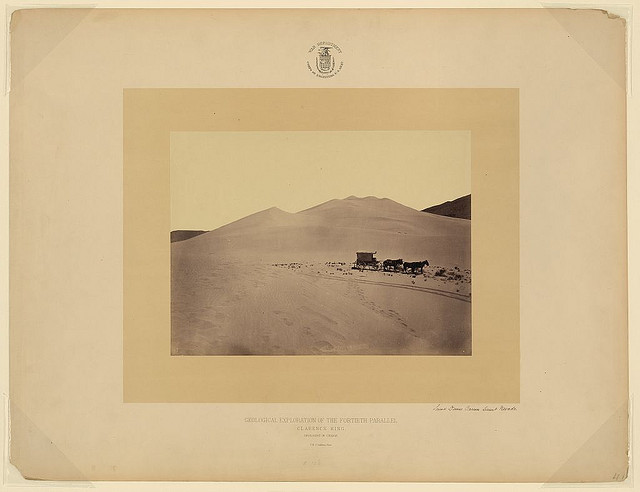
To all those who spend time building empires, creating networks, amassing fortunes, and spending all your waking hours building and creating and plotting and planning and in great part sacrificing your life in the name of power, glory and fame.  I give you Percy Shelly’s epic poem:

I met a traveller from an antique land
Who said: “Two vast and trunkless legs of stone
Stand in the desert. Near them on the sand,
Half sunk, a shattered visage lies, whose frown
And wrinkled lip and sneer of cold command
Tell that its sculptor well those passions read
Which yet survive, stamped on these lifeless things,
The hand that mocked them and the heart that fed.
And on the pedestal these words appear:
“My name is Ozymandias, King of Kings.”
Look on my works, ye mighty, and despair!’
Nothing beside remains. Round the decay
Of that colossal wreck, boundless and bare,
The lone and level sands stretch far away”.


The Other Debate: Footnote vs. Hyperlink

I work with a team of researchers.  I am old (over fifty) and my colleagues are young (twentysomethings).  I prefer my research that has footnotes.  You know, those things with numbers and text at the end of the page or article.  They prefer to use hyperlinks, the stuff you click on to get to a web site.

Suffice it to say it has been a challenge for both sides.  So in the spirit of fair play, I tried to imagine a debate – debates are pretty popular these days – between a Footnote and a Hyperlink.

You tell me who you think wins.

Footnote– I don’t get it.  As best I can tell the biggest distinction you guys have is that you’re underlined and in a different colored font.  That’s it.  I look at you and you tell me nothing.

Hyperlink– We’re highlighted so people know that with just a click they can get to the real source.  Jeez.  You old folks.  You know, you should get out more.  Take a walk or something.  Oh!  How about this?  How about going on the  Internet?  Ever heard of that?  Why waste type space with the endless dribble that you Footnotes put us through when you can take people straight to the source.

Footnote– Funny.  Well, not really funny.  More like impertinent.  Sad, really.  You young folks have an amazing ability to think you are the center of the universe.  That you know everything.  A bunch of baby Jesus’ out there walking around like you’re God’s gift to the planet.  Look, I like the Internet as much as anyone.  But what if there’s no 4G or WiFi?  And God forbid what if someone is reading this on a piece of paper?  What good is your “click” for then?  I’ll give you a hint.  Bupkiss!

Hyperlink– Dude, if you can’t afford to find a Starbucks then I don’t know if you should be reading.  I mean, really, even McDonalds has WiFi now.  Reading something on a piece of paper?  Please.  People used to read on clay tablets and scrolls.  You guys are still killing trees.  I bet you still use one of those 20lb telephone books.  Wake up grandpa.  Today people read on devices.

Footnote– People can read on whatever they want to.  That doesn’t bother me.  But at least with a footnote people get information.  You know, minor details like “author”, “date of publication”, “title”.  All that used to be important.  Check that; all that is still important.  At least for people who are more interested in the truth and real research, not just tricking  people into clicking on someone’s web site.

Hyperlink– Excuse me?!  While you’re sitting there in your wheelchair, I take people to the source.  Directly.  One click and boom.  You’re right at the source material.  In short, I actually do something.  You just sit there.

Footnote– You know, sometimes just sitting there is a good thing.  You might learn a thing or two by staying in one place, focusing and thinking about one topic longer than five seconds.  And please, spare the diatribe about source material and sending folks to “the source”.  Half the time when I click on you guys all I get is crap – stock symbols, press releases and a wikipedia entry.  Frankly, I don’t need your help to figure that out.  More often than not you “sources” are about as helpful as cheese sandwich to a drowning ferret.

Hyperlink– You just don’t get it do you.  It is about convenience and variety.  That is what people want today.  They want to be able to navigate sources without having go through the equivalent of a card catalogue.  And they want a variety of sources.  People like the offbeat, non-traditional perspective.

Footnote– Variety.  That’s a nice way to put it.  Others call it “promescuity”.  You hyperlinks will hook up with  just about anything or any body any time.  That is why you’ve got so many HTDs – hyperlinked transmitted diseases.

Hyperlink– Look, there’s protection for that.  And besides, hyperlinking is a good workout.  Please spare me the lecture on abstinence.  That’s been a great success, hasn’t it!  We’re way beyond that old man.  And please don’t tell me that all footnotes are pure.  I’ve heard stories.  Phantom publications. Footnote loading.  You guys have your issues.

Footnote– But at least we give people something.  We’re transparent.  We lay it all out.   Transparency, now there’s a word I hear a lot from you young folk.  Only problem – actually it isn’t the only problem just one of many – like in most things you guys don’t practice what you preach.  You guys are about as open as a Swiss banker.  And like a Swiss banker you’re more often than not laundering someone else’s trash.  At least with a footnote people know what they’re getting in to.

Hyperlink– Boring!

Footnote– (With a chuckle) I think you’ll find that as you get old boring is very under-rated.

Hyperlink–  O.K.  I’ll give you that.  Sometimes the hyperlink thing gets tiring.  And sure, there are a lot of hyperlinks out there that get carried away and end up doing some pretty silly things.  Chaulk it up to youthful indiscretion.

Footnote– Some?  Silly?  I’d say so.  Look, I think you’re a fine young man.  You seem to want to do the right thing.  And sure, there are a lot of us footnotes that have spent a bit too much time on the sofa.  We’d do well to get out there and have a bit more exercise.

Hyperlink– A bit?  Dude you’re a heart attack waiting to happen.  I’m telling you, this Internet and connectivity thing isn’t slowing down.  You need to get your game on.  Check that.  Just get in the game.

Footnote– So how about this, next time I reference source material I’ll ask one of your buddies to hyperlink to it?  How about that?

Hyperlink– Sure.  Too bad when people mouse over us we can’t do your schtick – the whole author, publication, date thing.  Maybe someone will figure that out in the next rev.  We’re always being update and rewritten you know.

Footnote– I’ll give you the contact information for the folks at the Chicago Style Manual.  Maybe they can get together with your programmer types.


Belle, West Virginia

They are easy to make fun of.

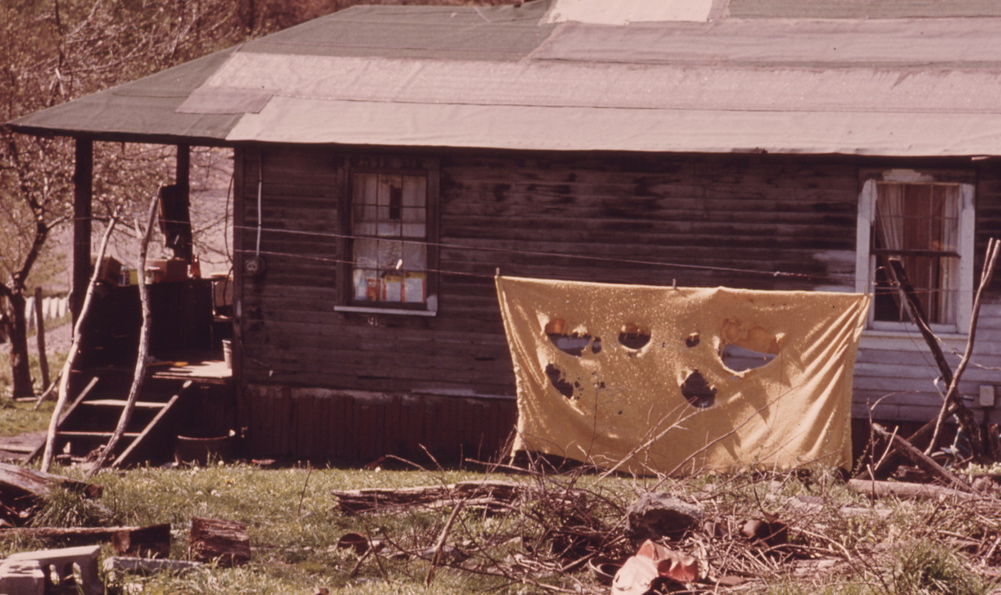
The women’s hair is a bit too big, their necklines a bit too low.  Men sport facial hair and at least one article of clothing is “camouflage.”  Men’s shirts usually don’t have sleeves.  Faces and hands reflect a hard scrabble living.  Cigarettes and obesity are hard to avoid.  A good percentage of the houses are “manufactured” – that is, mobile homes sitting on cinder blocks.  Many are abandoned.  Cars, or various parts of cars, dot the front lawns.  A lot of lawns need  mowing.

But then you meet and work with the people you see something very, very different.

You realize that a lot of us “sophisticated big city and affluent suburban” types could learn a lot from the people in Belle, West Virginia – this town just outside of Charleston south of the Dupont Chemical plant.  A place where the McDonald’s is open all night to accomodate the shift workers.

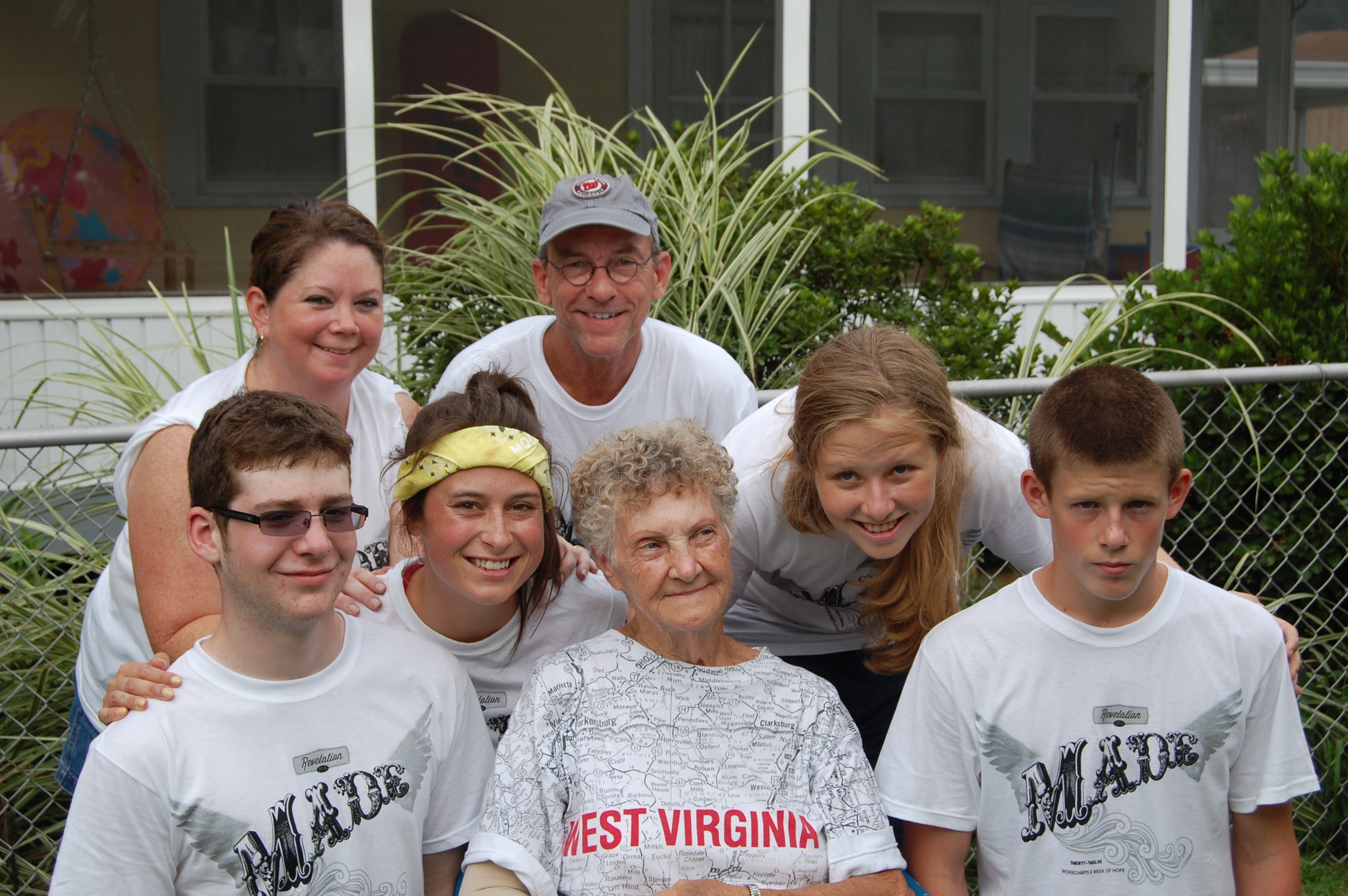
I spent a week there with a bunch of high school kids from churches across the country – Texas, California, Illinois.  They divided us into crews and we spent a week in a family’s home cleaning, painting, doing odd jobs.  We all learned some things.  How to rehang a gutter.  How to fix a roof.  How to build a deck.

But what we learned most was from the folks in Belle.

We learned that there are people out there who still know and care for their neighbors.  One of our crews was working with an elderly woman whose son was in the hospital with cancer.  He passed away that Tuesday morning, just the second day we were on the job.  Within hours there were dozens of neighbors descending on the house with food and condolences.  They stayed all day.  As one person said with a smile, “we take of each other here in Belle.”

How many of us in our comfortable suburban neighborhoods could say that?

We learned that there are people who keep their word.  Our crew was assigned to the house of “Miss Ginny”.  We were struggling with a gutter installation that was part of our work assignment.  The pitch on the roof was too steep (at least for us) and ladders too unstable.  On our last day in Belle, I saw a handful of men, the oldest well into his sixties, in the neighborhood fixing the roof on a small house down the block.  I asked if he’d come down and look at the project. He did.  “How much?”  I asked.  “Fifty dollars cash.” He replied matter-of-factly.  I handed him seventy-five dollars and never saw him again.  A week later I got a thank you note from our resident, Miss Ginny.  “The gutters look beautiful,” she wrote.

I wonder if I could have relied on a random contractor in our community to do the same.

We learned that there are people who are grateful for even the smallest of things.  We worked the entire week at Miss Ginny’s house, often in blistering heat.  Miss Ginny always sat with us in the shade on the carport.  She was hard of hearing, a cancer survivor, and suffered from lupus.  But she was there every day.  She’d be the first to hold the ladder when someone was up caulking or painting.  She’d bring us home made brownies and store bought Cheetos.  She had water in the fridge.  Her small frame home was dark and simple but she made it our own and never complained about the sweat, sawdust, and grass that I’m sure we tracked in and out.  She was all alone.  Her husband died seven years ago.  The two boys were far away.  She lived off social security.  Not a hint of any modern technology – no cable, no computer.  Her health was failing.

But never a complaint.  Indeed, I’ve never heard anyone say thank you as much as Miss Ginny.  “You guys are doing a great job!” she said repeatedly (even though our work was very amateur hour).  “Thank you so much!” came at least once an hour.  Miss Ginny constantly reminded us that she felt very blessed and thanked the Lord every day for all the good things in her life.  She didn’t have much, but was always joyful for what she had.

And I thought to myself how often I complain about even the small things that go wrong in life.

Yup.  We all learned a lot from the folks in Belle, West Virginia.

Get past the surface appearances, the stereotypes and the things that – at the end of the day – really don’t matter that much- and you see people that we all would do good to aspire to.

Truth is good, but not popular

I remember being there in the Moscone Center.  It was July 19, 1984.  (Yes, I’m that old.)  “Morning in America” had not arrived.  Many thought Reagan would be a one-term president.  I was watching Democratic candidate Walter Mondale give his acceptance  as the presidential nominee of the Democratic Party.  It was a great speech.  Historic.   Then about half-way through the speech came this:

Let’s tell the truth. It must be done, it must be done. Mr. Reagan will raise taxes, and so will I. He won’t tell you. I just did.

And I said to myself:

And you just lost!

Of course, Mondale was right.  That is, what he said was true.  President Reagan did raise taxes.  But that wasn’t exactly the campaign promise that gets people elected.

Recently President Obama got into trouble for saying that the private sector was doing “OK”.  It actually is doing OK.  The private sector’s got record profits and sitting on $1.7 trillion in liquid assets.  Small problem.  They got OK by laying off people.

Similarly, Congressman Ryan got in trouble by saying that entitlements were bankrupt and that we’d need to raise retirement eligibility and reduce benefits.  Can you guess how that went over?

Al Gore talked about an Inconvenient Truth.  Ron Paul reminds us that as a nation “we’re broke!”.

Popular guys, right?

We hear a lot about honesty and transparency in the communications business these days.  But the fact is that honesty – that is, telling the truth – is something that most people don’t want to hear.

Honesty is only popular when it is something you agree with … or it is funny.  That is, when honesty makes fun of other people.  (We don’t like truth that makes fun of ourselves!)

That’s why David McCullough’s commencement speech at Wellesley High School went viral.  He was the guy who had the guts to tell students, “you’re not special!

Telling truth to power?  Not really, just digging high school students.

Then there’s that great ad movie, Crazy People.  Dudley Moore plays an ad guy who is goes to an insane asylum and begins writing ads that are “truthful”.  Memorable ad copy included:

  • You may think phone service stinks since deregulation, but don’t mess with us, because we’re all you’ve got. In fact, if we fold, you’ll have no damn phones. AT&T – we’re tired of taking your crap!
  • Volvo, they’re boxy but they’re good.
  • Forget Paris, the French can be annoying.  Come to Greece, we’re nicer.
  • Porsche. It’s a little too small to get laid IN, but you get laid the minute you get out!
  • Paramount Pictures presents ‘The Freak.’ This movie won’t just scare you, it will f@*k you up for life.

The fact is most of us don’t like the truth.  And rather than become popular like Dudley Moore, the better story about the effect of truth-telling is in Moliere’s The Misanthrope.  Alceste, tired of the vapid, obsequiousness, and politesse of his community takes a vow of truthfulness.  He quickly finds that truth can be a lonely endeavor indeed.

Fast forward some 350 years, truth remains a bummer.  Colonel Nathan Jessep was right.  Most of us can’t handle the truth.

Don’t get me wrong.  Truth is a good thing.  It can make you free.

Just be prepared.

I don’t see a lot of evidence that it has ever been very popular.