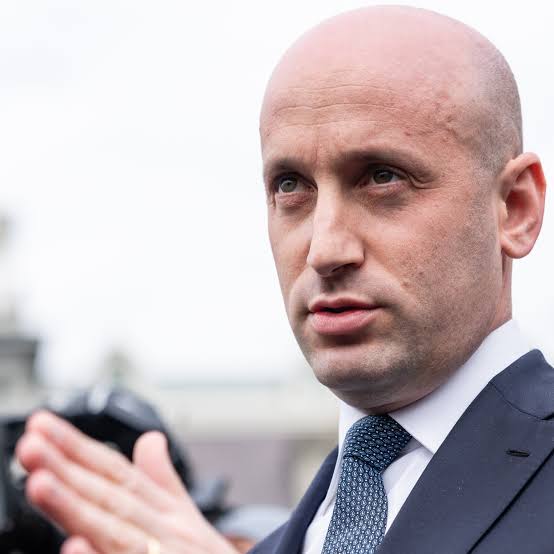
Following the U.S. government’s kidnapping of Venezuelan President Nicolás Maduro, longtime White House aide Stephen Miller observed:
“We live in a world in which you can talk all you want about international niceties and everything else,” … “But we live in a world, in the real world … that is governed by strength, that is governed by force, that is governed by power,” … “These are the iron laws of the world.”
Miller’s remarks reminded me of Chinese Chairman Mao’s observation, who famously wrote back in 1938, “Communists must grasp the truth; Political power grows out of the barrel of a gun.”
Odd that Trump’s Steven Miller and Communist China’s Chairman Mao speak with the same voice.
Or is it?
Consider three other observations on the politics of “power.”
The first is from the late Senator William Fulbright. His claim: power leads to arrogance. Senator Fulbright’s book, “The Arrogance of Power,” written in the 1967, was a damning indictment of the Johnson Administration and the Vietnam conflict. Well before the dispute among neocons on “regime change” and “nation building,” Fulbright wrote that great nations risk dangerous overreach by equating military power with moral virtue. The two are different. Indeed, he suggested that the two are often at odds.
The second is from Lord Acton. His claim: power leads to corruption. It was the late 19th century, and at issue were the abuses of the Catholic Church, specifically the atrocities committed by the Church during the Inquisition. Anglican Bishop Creighton suggested that we should be lenient in judging those in authority, as their roles and responsibilities are complex. Acton vehemently disagreed. He argued the opposite – that because of their position of authority, we should hold leaders more, not less, responsible. He went on to famously suggest that:
“Power tends to corrupt, and absolute power corrupts absolutely.”
Unfortunately, what is often overlooked are Acton’s following lines:
“Great men are almost always bad men, even when they exercise influence and not authority; still more when you superadd the tendency or the certainty of corruption by authority. There is no worse heresy than that the office sanctifies the holder of it.”
That is, power unchecked inevitably leads to the justification of self-interest over the public interest.
Finally, there are the words of antagonist O’Brien in Orwell’s “1984.” His claim: power is only interested in its own sake – that of power. In his torture of protagonist Winston Smith, O’Brien explains “the Party’s” preoccupation with power this way:
“We are not interested in the good of others; we are interested solely in power. Not wealth or luxury or long life or happiness: only power, pure power. We know that no one ever seizes power with the intention of relinquishing it. Power is not a means; it is an end. The object of persecution is persecution. The object of torture is torture. The object of power is power. Now, do you begin to understand me?”
Miller’s remarks were prescient. A month after his remarks, the U.S. and Israel attacked Iran. President Trump said the action was taken to eliminate imminent threats from the Iranian regime. It was a curious claim given that only six months earlier, President Trump said Iranian nuclear facilities had been “obliterated.” Today, the United States is negotiating with the Islamic Revolutionary Guard on the terms of a peace deal. After 3 months of war, over a dozen U.S. casualties and an estimated U.S. defense spend of over $130 billion, the IRC remains in firm control of the Iranian society, economy, and foreign policy.
Meanwhile, on the domestic front, President Trump campaigns against members of his own party whom he finds “disloyal.” He appoints Bill Pulte, heir to the Pulte home-building business, to head the Office of National Intelligence. Pulte, who has no intelligence background (double entendre), was formerly head of federal housing, where he tried (but failed) to find charges against elected politicians who opposed Trump. He appoints his personal tax attorney to serve as IRS chief counsel. And Trump is demanding that states turn over their voter rolls to a Justice Department run by Todd Blanche, formerly President Trump’s personal lawyer. Like Pulte, Blanche has led numerous failed investigations into President Trump’s political opponents.
So perhaps what Stephen Miller suggested holds true. At least it appears to be the guiding philosophy of this administration. And I think it best captured and articulated by Orwell’s O’Brien:
“… Power is not a means; it is an end. The object of persecution is persecution. The object of torture is torture. The object of power is power. Now, do you begin to understand me?”