Posts from the “Uncategorized” Category

Toxic Empathy?

If you ever needed confirmation that we’re living in an “Alice in Wonderland” world where up is down, night is day, and hate is love … consider this.

Empathy is toxic.

Yup. You read that right.

Empathy, the willingness and ability to share and relate to another’s experience – be it a family member, a neighbor, a friend – has, for some, become an insidious and evil emotion that threatens to ruin civil society.

Apparently, some think that Jesus’ claim that one of the two greatest commandments –  “love your neighbor as yourself” – was a bad idea.

And guess who thinks that Jesus got it all wrong … (drumroll) …

You guessed it! The religious right!

According to Allie Beth Stuckey, empathy is being “hijacked” by progressives who are using empathy to get conservatives to be, well, empathetic. Joe Rigney goes a step further. He classifies empathy as a “sin!” NYTimes writer Jenifer Sazali, notes that Rigney and Stuckey believe that radical liberals are using empathy to “trick Christians into tolerating abortion access and gay marriage.”

How dare they!

Oh, and then there’s Vice President JD Vance, a professed Catholic, who suggests there’s a Christian “empathy hierarchy.” According to the Vice President:

“You love your family, and then you love your neighbor, and then you love your community, and then you love your fellow citizens in your own country. And then after that, you can focus and prioritize the rest of the world.”

He must have missed reading Jesus’ parable of the good Samaritan.

Then there’s Musk, the father of 14 children by four different women. He calls himself a “cultural Christian.” According to him, “The fundamental weakness of Western civilization is empathy,” and that “foreigners” are “exploiting a bug in Western civilization, which is the empathy response.” For Musk “love your neighbor” should become “loathe your neighbor.”

No. “Toxic empathy” is an oxymoron. It is a desperate attempt to relabel a human virtue – in my opinion, a “Godly virtue” – as a vice.

What empathy actually is (and isn’t)

Empathy isn’t pity, and it isn’t just “being nice.” At minimum, it’s the ability to understand—sometimes feel—what someone else is going through.

Empathy is a critical step that moves us beyond pity to action. Sympathy says, “I care about your pain.” Empathy says, “I can sense your pain.” Compassion goes a step further: “I want to help relieve your pain.”

Empathy isn’t the slippery slope; callousness is.

Empathy is the distinctive characteristic of the Christian God

The irony of the claim by some Christians that empathy is “toxic” is that empathy is a distinctive characteristic of the Christian God.

At the core of Christian belief is that “the Word became flesh, and dwelt among us.” That means that God, in the person of Jesus, shared our pain, our fears, our shortcomings, our frustrations, our misgivings, our passions. For Christians, empathy isn’t optional—it is the unique shape of the gospel. The life of Jesus is a witness to a God who is empathetic to the human condition. No other religion or faith can match that claim.

Empathy Myths vs. Realities

Here’s the myth vs. the reality of empathy:

Myth – Empathy makes you weak.
Reality – Empathy strengthens relationships and trust.

Myth – Empathy excuses bad behavior.
Reality – Empathy helps you understand motives while still holding people accountable.

Myth – Empathy is a political tool.
Reality – Empathy is a human virtue—and a divine one.

Empathy vs. Polarization

We live in a polarized world where disagreement quickly leads to dehumanization. Empathy is how we resist that slide. It humanizes the other side long enough for us to hear, understand, and—when needed—challenge. It’s not moral mush; it’s the precondition for moral persuasion.

When critics say empathy is a progressive plot, they inadvertently prove the counterpoint: that lack of empathy is what turns political opponents into targets and neighbors into abstractions.

If your theology or politics requires you to feel less with people in pain, you’re moving away from Jesus, not toward Him. If your empathy ever tempts you to excuse harm, that’s not empathy—that’s avoidance.

I think Erich Bridges put it simply: “

Toxic empathy isn’t our problem; hardness of heart is.”



Whaddya Think?

Whatever it is—your thinking, that is—just know this: according to some, it might be the source of most (if not all) of your problems.

That’s the gist of a book I just picked up. I was at Barnes & Noble to grab a copy of Orwell’s 1984 (a story for another post!) when a small stack of books caught my eye at the checkout counter. Sitting on top was a tidy little hardback with an irresistible title: “Don’t Believe Everything You Think.”

Cute. Creative. Clickbait for the analog world.

It piqued my curiosity. Plus, the book had that satisfying heft in the hand and, thanks to some B&N credits, it was basically free.

Why the curiosity? I’ve long wrestled with my own thinking. I think a lot. Too much, I think. Sometimes it serves me well. Other times, it takes me down mental rabbit holes with no cheese at the end.

See? There I go again—thinking about my thinking.

So I figured: maybe this Nguyen fellow might provide some valuable insight.

Setting the Stage

But before diving into the book’s ideas, let me offer three quick caveats—wisdom gleaned from four decades in politics, marketing, communications, and the occasional stint as a high school English teacher. As for the latter, when analyzing a piece of non-fiction, I typically advise my students to do three things.

First, look up the author. Mr. Nguyen has a well-polished online presence: website, blog, Instagram, YouTube. But here’s the catch—no bio. No credentials. No clear academic or professional background. It’s all sizzle, very little steak.

Second, when it comes to nonfiction, follow the sources. In this case, there aren’t many. Vague personal anecdotes, sure. But no studies, no citations, no bibliography. It’s kind of like eating soup with a fork—you’re not sure you’re getting the full nourishment.

Third, consider the style. Nguyen writes in a self-help, motivational speaker kind of tone. Lots of “You can do it!” and “Here’s the secret I discovered!” Think Tony Robbins meets the latest “lose weight now!” commercial.

The Big Claim

Nguyen’s core message is clear: “The root cause of our suffering is our own thinking.” (pg. 21)

OK. I get it. As someone who struggles with overthinking, I can relate.

Yes, anxiety is rampant. A 2024 poll from the American Psychiatric Association found that 43% of U.S. adults feel more anxious than last year. That’s up from 37% in 2023 and 32% in 2022.

Why the uptick? Some blame the economy. Others point to climate change. Or political polarization. Or gun violence. Jonathan Haidt, in The Anxious Generation, puts the blame squarely on technology.

But Nguyen? He says it’s just our thinking. There’s a good case to be made. Most of us experience over-thinking – aka “rumination” – at some point in our life. According to one study “nearly 73% of 25 to 35-year-olds and 52% of 45 to 55-year-olds experienced overthinking in their day-to-day lives.” According to this and other studies, this “rumination” tends to decrease with age. I must be the exception to the rule.

So Nguyen is on to something. But it’s the diagnosis—and more importantly, the prescription—that gets my brow to furrow.

First, Nguyen draws a sharp line between “thoughts” and “thinking.” Thoughts, he says, are neutral. Thinking is what gets us in trouble. Interesting… but also a little like separating “fire” from “burning.”

Further, he claims that thoughts come from “the universe or our higher selves,” while thinking comes from “our egos” (pg. 78) Really?

Consider these “thoughts”:

– White people are the superior race.
– People I disagree with are assholes.
– Let’s get drunk.
– Money is the most important thing in life.

Is that our higher self? I don’t think so (there I go again!) In his book, Nguyen’s thinking (dog gone it! I did it again!) is akin to Rousseau—humans are born pure and corrupted by the world. But Hobbes might have the stronger case: that in our natural state, humans are solitary, poor, nasty, brutish, and short.

Me? I think the truth is probably somewhere in between.

Second, Nguyen suggests that thinking prompts us to think in terms of “black and white” – “good and bad.” He suggests that there’s no such thing as “good” or “bad.” He quotes Shakespeare’s Hamlet that: “There is nothing either good or bad, but thinking makes it so.” Yes, many philosophers (and therapists) urge us to reserve judgment, especially in the moment. What seems “bad” today—a lost job, a breakup—may turn out to be the beginning of something better. But denying good and bad altogether? That’s not just philosophical fastidiousness—it’s potentially dangerous. It risks numbing us to injustice and inaction. As Dr. King reminded us, we must respond to “the fierce urgency of now.”

Third, Nguyen claims it’s not what we think—it’s the mere act of thinking that causes suffering.

(Wait… is Nguyen asking us to think about that?)

I don’t know about you, but some of my biggest regrets came from not thinking. And some of the world’s greatest advances —personally and societally—have come from people daring to think in new and challenging ways.

Sure, overthinking can lead to what psychologists call “ANTs”—automatic negative thoughts. It can be paralyzing. But the antidote to bad thinking isn’t no thinking. It’s better thinking.

So… Think Again?

Philosophers from Aristotle to William James to Viktor Frankl have praised the power of thoughtful reflection. And science agrees—positive thinking improves mental and physical health.

Which brings to mind the words of St. Paul:

“Finally, brethren, whatsoever things are true, whatsoever things are honest,
whatsoever things are just, whatsoever things are pure, whatsoever things are
lovely, whatsoever things are of good report; if there be any virtue, and if there be
any praise, think on these things.” (Philippians 4:8)

Thinking isn’t the enemy. It’s a tool. And like any tool, it can be misused—or wielded with wisdom.

So yeah. Don’t believe everything you think.

But don’t stop thinking either.

Think about that.

Jerry’s Gumbo

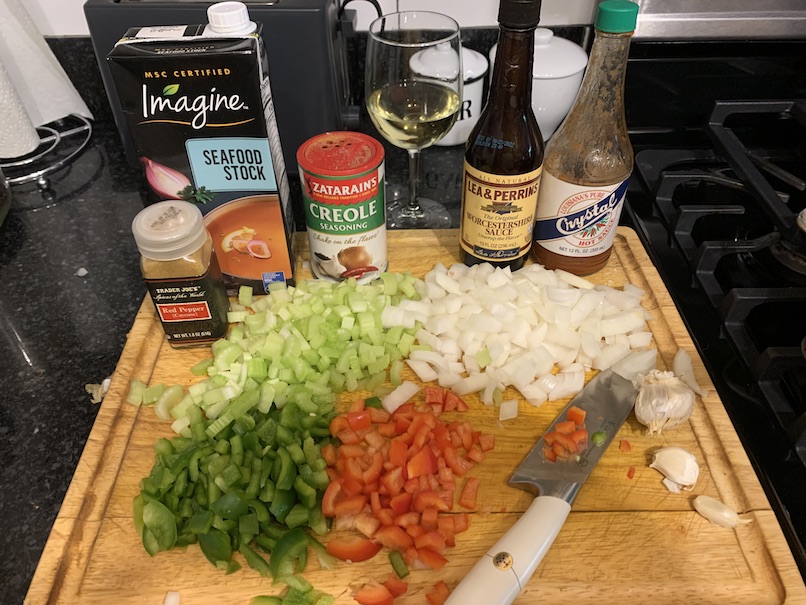
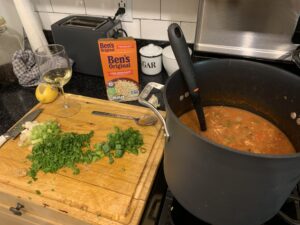
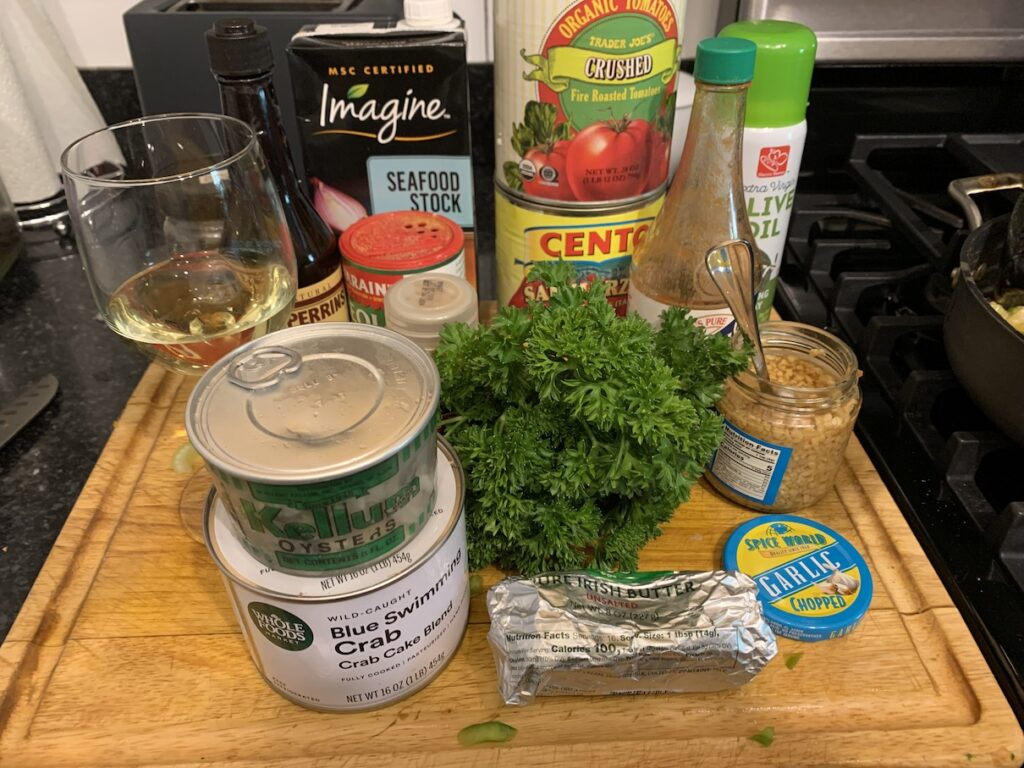
Gumbo ingredients

There are three things at which New Orleans excels: food, music, and having a good time. 

Let’s talk food.

N’awlins cuisine is not just about eating it, but also about preparing it. For me, it was a combination of watching Justin Wilson on local public television, learning a thing or two from Leon Soniat (a Jefferson parish legend), and my friendship with Rita Godchaux. 

Rita was a grade ahead of me as were my two best friends Veazey and Alfred.  Rita made it through Louisiana State University (LSU) with a degree in “general studies” which, at LSU, translates into a degree in specialty #3, that is “having a good time.” In fact, I’m pretty sure that if there were a Dean’s List in having a “good time,” Rita would have been there – every semester.

After graduation, as many of my friends, Rita ended up working on offshore oil rigs in the Gulf of Mexico. But women back then didn’t qualify for being a roustabout or roughneck. Rather, Rita apprenticed and later became head chef, knowing that being a cook for roustabouts and roughnecks is about as close to being God as possible. It didn’t hurt that Rita was pretty hot.

Like other rig workers, Rita had a “two week on, one week off” schedule. She would often spend her “off” weeks at The Palm Beach Club – aka Veazey and Alfred’s house just off Jeff Highway in the heart of Jefferson Parish’s Harahan. Rita would trade a week’s worth of lodging and partying for a day’s worth of cooking. The latter would generate enough food to last until her next appearance.

Here’s what I learned from Rita about cooking gumbo. (I learned a lot of other things from Rita, but we best stick with gumbo for now.)

Before you start, have a bottle of wine. Maybe two. Check that. At least two.

A good gumbo takes about a couple of hours and the better part of a bottle of wine. White for seafood gumbo. Red for sausage and ham gumbo. Let’s go with white and seafood.

Regardless of which color wine and dish you choose, the foundation of a good gumbo is a good roux. Like many things in life, a roux is simple but challenging. The ingredients are simple – oil and flour. Typically it is one-half or 3/4 cup each. 

The first thing to do is to heat up the oil in a large deep cooking pan. Put it on medium temperature. After a few minutes (use the time to open that wine bottle!) drop on a sprinkling of flour. Make sure that the oil is hot enough to make the flour sizzle. If so, slowly feed in the rest of the flour. Use the back of a spatula to work the flour into the oil until it is totally mixed together. Turn the heat down and spend the next twenty minutes using the back of a spatula to work the flour and oil mix until it is a thick golden brown.

Take your time. This is the zen part of Cajun cooking. A good roux requires requires patient attention. Rita said that you need to work the mix at least once every minute or so. In between, you’ve some time to (a) drink a little wine and (b) dice some vegetables. They’re both part of the recipe!

The vegetables consist of three onions, two bell peppers (one green and one red), and 4-5 stalks of celery. Find a sharp knife. Use your best dice technique. Mix them all in a bowl.

Take a sip of wine.

Once the roux is a dark golden brown (about a full glass of wine’s worth) toss in the vegetables and stir with the goal of coating all the vegetables with the freshly made roux. Continue to work the vegetables until the onions caramelize and the peppers and celery soften.

Now comes the multi-tasking.

In between working in the vegetables, do three things. First, find a place on the stove for one of your bigger, deep cooking pots. That is where everything is going to happen next. Second, open up a small can of tomato paste and a big can of whole or chopped tomatoes. Finally, open up a box of seafood stock. And when the vegetables are nice and soft, combine all three – the vegetables, the tomatoes, and the seafood stock – in that large pot and crank up the heat.

Have another sip of wine.

While the stew begins to heat up, prepare the shrimp. You’ll want a couple of pounds of medium size shrimp. I like them fresh and raw. Rita said that the best way to prepare shrimp is either to bake or steam them. Baking works best for bar-b-que shrimp but that’s another recipe, so Rita typically leaned towards steaming. That requires another pot with a couple of inches of water and a colander large enough to handle 2 lbs of shrimp. Once the water is boiling, put on the shrimp and cover. You’ll want to stir every 15-20 seconds or so. Shrimp cook quickly and, if overcooked, they get a bit rubbery so you’ll want to stop once the shrimp get nice and red and the skin begins to separate. Drain and let the shrimp sit for a couple of minutes.

Everyone has their own way of peeling shrimp. Rita said the tail goes first. Then you grab the legs at the top of the shrimp and peel around in a circular motion. Once that’s done do something similar to the bottom half. That works for me … but you do you.
This is optional, but if I’ve time I often get a pan and lightly sauté the shrimp in a garlic butter mixture. Low heat. Careful not to overcook. I find it provides a bit more flavor.

Then there’s the okra. Can’t have gumbo without okra. But watch out. Okra is a bit dicey to cook. Slice them to about ¼ inch. Then slowly cook 2-3 tablespoons of butter. Add the okra. Stir constantly. Consider adding a bit of Worchester sauce (but not too much!!!). Don’t overcook as overcooked okra can get gooey quickly.

Put the cooked shrimp into the large pot of vegetables, tomatoes, and seafood stock. Add a large can of crabmeat and – if you’re brave – a can of whole oysters (with sauce). Then add the okra.

Have another sip of wine.

At this point, you should have a hefty pot of gumbo. Boil then simmer. Once that’s past another sip of wine you add the basil, bay leaves, (very small) thyme, chili power (cayenne pepper is better), a dash of Worchester.

Now for the hot sauce. Feel free to toss in Colonel McIllheny’s Tobasco sauce. But if you’re really brave and want to show your native roots consider Crystal Hot Sauce from my hometown of Jefferson Parish.

While everything settles, get busy cooking a box and potful of Uncle Ben’s rice. A medium-size box of Uncle Ben’s Original Long Grain White Rice should do the trick 

Finally, know that gumbo tastes better over time. So if you’ve time, let it sit for at least a hour or so. 

Time to finish off the first bottle of wine and open another. 

When you’re ready get a nice, rounded scoop of rice and serve the gumbo over it so it surrounds it like a moat. Season and spice to your taste. Rita liked to add a dash or file powder to hers.

Sidenote. If you really want to show off, have a couple of baguettes handy, slice, butter, maybe a bit of garlic powder and lightly toasted in the oven.

You’ll have enough for anywhere from six to ten servings, depending on the size of the serving. Rita’s mix usually lasted the better part of the week.

Enjoy! As they say in the Crescent City, “Laissez les bons temps roulez!”

Ingredients

2 lbs of shrimp

2 dozen oysters (medium size can)

½ dozen crabs (medium size can)

¾ oil (or, if you’re adventurous, lard!)

3 onions, chopped

4-5 large cloves of garlic, minced

1 6-oz. can of tomato paste

1 16 oz. can of whole or chopped tomatoes

1 ½ quart of seafood stock

2 cups of chopped okra

½ tsp. of thyme

1 tsp. of basil

4-5 bay leaves

½ tsp. of chili powder (use cayenne!)

½ cup of minced parsley

Dash(es) of Crystal/Tobasco hot sauce

1 stick of butter

https://youtu.be/eK4umRMJlrs (Justin Wilson)

Choices

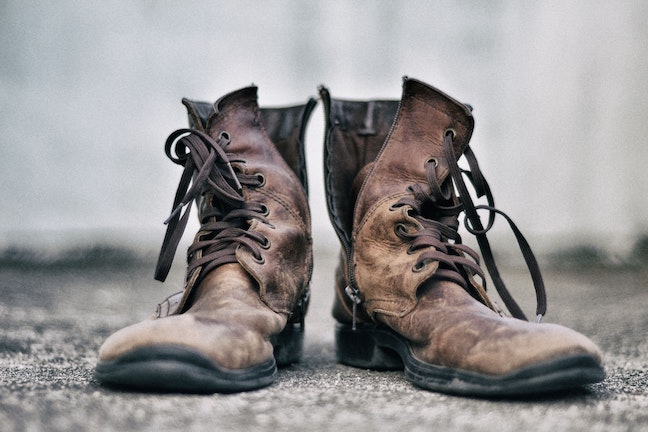
boots

Photo by Oziel Gómez on Unsplash

We have them. At least some of the time.

But are we the result of our choices?

I ask because I’m finishing up a course for high school teachers on what is called “The Economic Way of Thinking.” It didn’t take long for me to learn that it was mainly a course on how to teach or infuse history with the benefits of free-market, capitalism. Business=good. Government=bad.

A lot of their logic rests on the premise of choice. Indeed, the very first principle taught as part of the course was: People choose, and individual choices are the source of social outcomes.

Now I’m a big believer in personal responsibility. But when I read this I thought to myself, “there’s some amiss here.” It made everything sound so simple. Too simple. You choose and from those choices you make, stuff happens. Some good stuff. Some bad stuff. But whatever stuff it is, it is all the result of your choices.

As I read this decidedly conservative curriculum the more I wondered: “how much choice do people really have?”

Probably less than one might think.

There are a lot of things about which we have no choice. I didn’t get to choose my gender, ethnicity, or my race (I’m male and very white). I didn’t get to choose whether my parents had good or bad parenting skills (I got very lucky on this one!). I didn’t get to choose my lower-middle-class neighborhood outside of New Orleans (not too dangerous but sometimes sketchy). And I certainly didn’t get to choose my DNA or “natural talents” (missed out on most of those).

Now one might say that these don’t matter much. That regardless of whatever combination of the above factors – gender, race, parenting, neighborhood, genes, talent – regardless of any of that, each person gets to “shape” their own destiny. 

True in theory. But “conditions” shape “choices.” The latter makes the former either much easier or much more challenging. And for every story about a down-and-out, challenged individual who through pluck and effort made something out of themselves, I can probably identify dozens who made the same effort, worked just as hard, but found themselves at the wrong place at the wrong time with the wrong boss and under the wrong circumstances.

History is about choices. But history is also about circumstances and the chances and choices they afford. It is good, I believe, to recognize that because of their circumstances, some have much better choices – and therefore much better chances – than others.

I’m reminded of the exchange between reporter Sander Vanocur of NBC News and Dr. Martin Luther King in May 1967. Here’s the full interview posted by Josh Dance:

NBC correspondent Sander Vanocur:

What is it about the negro I mean every other group that came as an immigrant somehow? Not easily, but somehow got around it. Is it just the fact that Negroes are Black?

Martin Luther King:

“White America must see, that no other ethnic group has been a slave on American soil. That is one thing that other immigrant groups haven’t had to face.

The other thing is that the color, became a stigma. American society made the Negroes color a stigma. America freed the slaves in 1863, through the Emancipation Proclamation of Abraham Lincoln, but gave the slaves no land, and nothing in reality. And as a matter of fact, to get started on.

At the same time, America was giving away, millions of acres of land in the west and the Midwest. Which meant that there was a willingness to give the white peasants from Europe an economic base, and yet it refused to give its black peasants from Africa, who came here involuntarily in chains and had worked free for two hundred and forty-four years, any kind of economic base.

And so emancipation for the Negro was really freedom to hunger. It was freedom to the winds and rains of Heaven. It was freedom without food to eat or land to cultivate and therefore was freedom and famine at the same time.

And when white Americans tell the Negro to “’lift himself by his own bootstraps’, they don’t, oh, they don’t look over the legacy of slavery and segregation. I believe we ought to do all we can and seek to lift ourselves by our own bootstraps, but it’s a cruel jest to say to a bootless man that he ought to lift himself by his own bootstraps.

And many Negroes by the thousands and millions have been left bootless as a result of all of these years of Oppression and as a result of a society that deliberately made his color a stigma and something worthless and degrading.”

So in my lesson plans, I’ll include the “economic way of thinking” and give a tip of the hat to Adam Smith and free-market enterprise. 

But when it comes to choices and circumstances … I’ll be sure to include Dr. King’s perspective as well.


Statues

Jefferson Davis statue monument avenue by barxtux

There’s a lot of talk about statues these days. Actually, a lot more than just talk. And even the “talk” is a euphemism. Not a good time to be a statue.

While Andrew Jackson and the founding fathers have been the source of some of the grumbling most attention has been given to Confederate statues.

There are those who say these statues glorify those who fought to maintain the right for white people to enslave black people. Others say these statues simply document figures in U.S. history. 

Both views are correct. This is exactly why so many communities are deciding to rid themselves of them!

A recent news report about yet another confederate statue being taken down provides a clue. In what was otherwise a piece on protesters, police and community groups there was a seemingly random “throwaway” line that, from a historical perspective, made all the difference.   It was this:

“The Lee statue was erected in 1904.”

Wait. 1904? A statue of Lee almost forty years after the end of the Civil War? Over thirty years after Lee’s death? (He died in 1870.)

Usually, statues and commemorations are made either contemporaneously or immediately after a hero’s demise. We were busy naming buildings and airports after President Ronald Reagan while he was still living. Why erect a Lee statue more than a generation after his death?

James Loewen – who both in appearance in whose voice is eerily similar to Bernie Sanders – wrote a book, “Lies My Teacher Told Me: Everything that You American History Textbook Got Wrong.” Loewen was a sociologist who became interested in historical landmarks. He found that “historical markers” – including statues – were less about accurately recording history and more about the motivation of interested parties to leave a marker or message for current and future generations on how to interpret that history.

His recurring admonition was, if you want to understand the meaning of a statue – particularly a Confederate statue – don’t look at what it is or what it says, focus on when it was erected.

The fact is that up until post-Reconstruction, most civil war monuments were in remembrance of the fallen. The Civil War was and remains the bloodiest in American history. Rough estimates are that it claimed somewhere between 610,000 to 750,000 lives. Monuments and markers honored the dead.

But ten years after the Civil War the United States and its northern Republican reformers began to tire from the pains of reconstruction. And by the end of the 1870s and with the election of Rutherford B. Hayes, whites clawed back to power and quickly implemented a range of laws crippling the 15th amendment – everything from the infamous “grandfather clause” in Louisiana to poll taxes and literacy tests. Between that, intimidation, and outright violence and lynching, white supremacists regained government control.

They, in turn, engaged in a well-organized effort to recast the Civil War as that of a “lost cause” pursued by noble, honorable, and well-intentioned men of the South. They also wanted to remind the negro – that was the nicest word used back then – who was in charge. In addition to rewriting history, another motivating factor was intimidation and domination. That campaign included monuments that blanketed the South from 1890 to 1920, all with the help of Ku Klux Klan and associated organizations such as the United Daughters of the Confederacy.

The goal of these statues was to remind both radical Republicans and freed African American slaves that segregation would not only continue in the South but would be celebrated as worthy and noble. As Wiley M. Nash noted at the erection of a Confederate statue in 1908:

Like the watch fires kindled along the coast of Greece that leaped in ruddy joy to tell that Troy had fallen, so these Confederate monuments, these sacred memorials, tell in silent but potent language, that the white people of the South shall rule and govern the Southern states forever.

The historical record is abundantly clear. These statues weren’t just about remembering history. They were about reinterpreting and ensuring a particular view or version of history – that of white supremacy – would be remembered in the future.

I grew up with these monuments as a boy in New Orleans. The Robert E. Lee statue was erected in 1880. “Lee Circle” – the site of the Robert E. Lee statue erected in 1880 – was notable for its prominence as the main thoroughfare from the Central Business District to the Lower Garden District and a central stop for the city’s famous streetcars. No matter that General Lee had never visited the city of New Orleans!

New Orleans Mayor Landrieu took down the monument at Lee Circle. In his speech – which I recommend everyone read – he noted that:

“The historic record is clear, the Robert E. Lee, Jefferson Davis, and P.G.T. Beauregard statues were not erected just to honor these men, but as part of the movement which became known as The Cult of the Lost Cause. This ‘cult’ had one goal — through monuments and through other means — to rewrite history to hide the truth, which is that the Confederacy was on the wrong side of humanity.” 

Mayor Landrieu also repeated the oft-quoted claim by confederate vice-president Alexander Stephens, who compared to Jefferson Davis, was a “moderate” on issues of slavery and race. Stephens noted that the Confederacy’s:

“cornerstone rests upon the great truth, that the negro is not equal to the white man; that slavery — subordination to the superior race — is his natural and normal condition. This, our new government, is the first, in the history of the world, based upon this great physical, philosophical, and moral truth.”

So in taking down these statues are we taking down history?

Yes! But it is not the taking down of the history of the Civil War. That history remains and is well preserved if you visit Gettysburg, Antietam, or Manassas.

The history that is being taken down is that which happened a generation after the Civil War. The history that protesters are refusing to celebrate is that of a successful post-reconstruction effort to make acceptable – even honorable – a racist and segregated society long after emancipation and equal protection were American law.


“Along Monument Avenue” by barxtux is licensed under CC BY-NC-SA 2.0

A New Year

New Day

It is that time of year. That is, time for a new one. A new year.

New Year was never a big deal in my family. We had three holidays – Thanksgiving, Christmas, and Easter. If you discern a Christian faith-based theme you’ve got it right. God’s love, God’s forgiveness, and thanks be to God. That was about all that merited big celebrations and brouhaha in our home.

Other annual celebrations – birthdays, anniversaries, a new year – well, they never quite made the cut.

Part of that was likely due to my parents midwestern and Depression-era roots. Another day was just another day. The sun will come up. There will be work to be done. There will be mouths to
feed, clothes to wash, bills to pay. Just like the day before.

That may seem curmudgeonly if not depressing to some, but there was a flip-side to this practical and seemingly unsentimental view of life that is both liberating and exciting.

One the one hand, every day is the same day. But on the other hand, every day is its own day. A new day, if you will perhaps even a new year.  The flip side of “another day is just another day” is this: “every day merits its own celebration.” No need to wait for a birthday to celebrate your life. No need for an anniversary to celebrate your marriage. No need for a new calendar to celebrate past accomplishments or to set new goals. You have the opportunity to do each one of those things every day! Why pack them all in one? What are you going to do with the other 364?

For Mom and Dad, this way of thinking was particularly applicable for resolutions, something we commonly associate with a New Year. If you want to do something – set a goal, accomplish a dream, make a change, quite a bad habit, start a good one – shoot, you can do that any day! You can do that today! Why wait for a “special day” to make that happen? Before there was a Nike, there was a Mom and Dad who would say that if you wanted to do something, well, “just do it!”

So it is in that spirit that I write to all those celebrating the New Year with their lists of goals and resolutions – good luck! I hope you achieve them all. But know this. There is a good chance that you’ll fall short in one or more (all?). But that’s ok. Because there is always tomorrow. And you can try again. And again. The sun will come up. There will be work to be done. There will be mouths to feed, clothes to wash, bills to pay. Just like the day before. But there’s no need to wait for another year to roll by. You can try it again tomorrow. And the next day.

Similarly, for those who have “given up” on New Year’s resolutions, take heart. Resolutions aren’t contingent on January 1 st . You can make that resolution any time. Today, in fact! Yes, you’ll likely fall short, just like those who woke up January 1 st clinging to their resolutions with an earnest intensity only to see them in tatters a month later. That’s ok too. You too, can try again tomorrow. Or the next day.

So Happy New Year. Because every day is a new day. Every day is a New Year.

A Song for Its Time … and a Dime

For those of you who are readers of the JuiceBar, the following essay is part of a Web 2.0 exercise in presenting a popular culture artifact for the graduate course Teaching & Learning Historical Thinking, part of the George Mason University College of Education and Human Development Secondary Education (SEED) Program. The requirement is a Web 2.0 exercise that could be used in a high school history course. In this case, I’m using this blog post to engage students on how music can provide insight into history. I hope you enjoy it. And feel free to pretend you are in my high school history class and offer your thoughts on current songs that give insight on what is going on in today’s social, economic and political culture.

Folks, the topic today is popular culture. Specifically, what you can learn about history and a historical period through popular culture. By popular culture, I thinking about things like movies, fashion, and music. 

In this case, let’s take a look at music.

Music is often both a reflection of and reaction to the political, economic, and social trends in a given period. Take the issue of war and conflict. In American history, we have songs of the American Revolution, Civil War, World War II and the Vietnam War. If you’re interested, just try “Googling” any of those wars and “music.” You’ll get some interesting lists. Most of the songs of earlier wars were written to support the cause. But there were others that gave voice to the opposition to war.Others oppose it. If you’re looking for something that typifies the latter, listen to my favorite anti-Vietnam anthem, Edwin Star’s “War” which was popular protest song during Vietnam. It is a classic.

But music isn’t just reflective of or a reaction to conflict.  When you think about American history in general, you can identify music that is reflective of social movements in everything from the suffragette movement (it even has a Spotify channel!) to desegregation in the 60s to the LGBT movement and Katy Perry’s song “I kissed a girl.”

[Hold on to that thought because a bit later I’m going to ask you to identify a song in popular culture today that, in your opinion, is reflective in some way of what is going on in today’s society.]

In this case, we’re going to focus on songs that reflect the economic developments. This was particularly true of the songs of the 30s and the Great Depression. The depth and scope of the Great Depression are hard to appreciate today.  At its height nearly a quarter of Americans were unemployed. Amidst these dark times emerged a lot of upbeat music (most notably, swing music). In that case, one can interpret music as a reaction to the downbeat mood. There were a lot of those – upbeat tunes and lyrics, that is. Hard to imagine that one of the most popular titles during those years was a 1933 tune called “We’re in the Money.” Ironic since most people weren’t (in the money, that is) but sociologist speculate that tunes like this gave people who otherwise had no hope, hope.

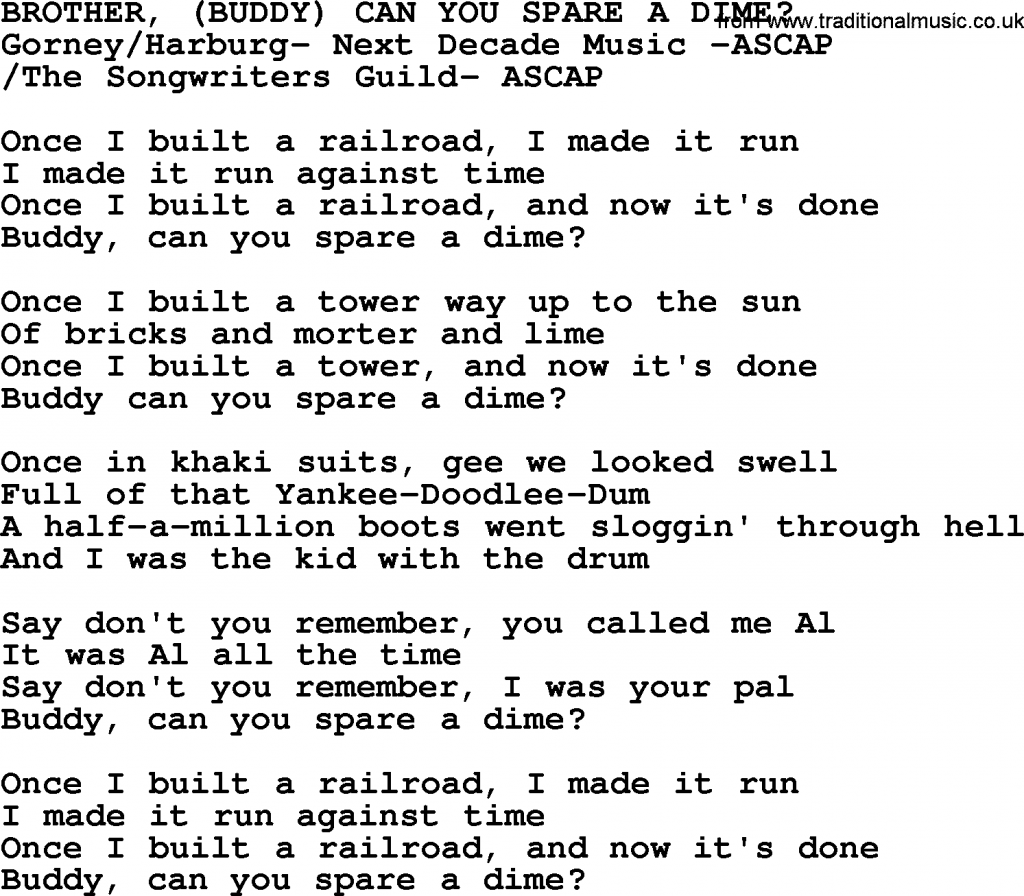
But in terms of a song that best truly reflected the era was the tune “Brother, Can You Spare a Dime” which came out in 1932 at the deepest periods of unemployment. I’ve copied and pasted the lyrics to the song below.

The tune, which first was sung as part of a review titled “Americana” became the “anthem” for workers during the Great Depression. It was a thinly veiled indictment of a capitalist economic system that many people felt had “left behind” the workers that built America.

The song chronicles the story of the workers who built the nation’s railroads, buildings, and infrastructure as well as those who fought in the gruesome first World War (“khaki suits”) and how the U.S. economic system seemingly deserted them during the depression and now they are forced to “beg” for money.

Not only can the tune give insight into the 1930s one could also be used to gain insight into today’s modern economic malaise.

Specifically, you can read through the lyrics of this song and hear the same complaints that many American workers in the Midwest have today about the loss of good-paying manufacturing blue collar jobs due to automation and international trade.

NOW HERE’S MY ASK of you.  Comment on this blog post. Feel free to react to anything I’ve written above but I want you to specifically comment on the lyrics of this song and how you think it gave voice to workers in the Great Depression. But wait, there’s more! In your comment I also want you to identify a relatively current song – say something in the last five years – that you think captures one element of what is going on in today’s culture, economy, or politics. If you can’t find one, feel free to write a song of your own! One important note. Let’s keep any current song one that is free from explicatives or vulgar language. I know that knocks out quite a few. But think about some of the songs that are on your favorite playlist over the past few years and think about what that song helps describe developments in today’s society, culture, politics or … economics!  BTW if you want to rewrite the song below for today, you’ll have to change the numbers. A dime back in the 1930s would be about a buck fifty today ($1.47).

“Brother, Can You Spare a Dime,” lyrics by Yip Harburg, music by Jay Gorney (1931)

They used to tell me I was building a dream, and so I followed the mob,

When there was earth to plow, or guns to bear, I was always there right on the job.

They used to tell me I was building a dream, with peace and glory ahead,

Why should I be standing in line, just waiting for bread?

Once I built a railroad, I made it run, made it race against time.

Once I built a railroad; now it’s done. Brother, can you spare a dime?

Once I built a tower, up to the sun, brick, and rivet, and lime;

Once I built a tower, now it’s done. Brother, can you spare a dime?

Once in khaki suits, gee we looked swell,

Full of that Yankee Doodly Dum,

Half a million boots went slogging through Hell,

And I was the kid with the drum!

Say, don’t you remember, they called me Al; it was Al all the time.

Why don’t you remember, I’m your pal? Buddy, can you spare a dime?

Once in khaki suits, gee we looked swell,

Full of that Yankee Doodly Dum,

Half a million boots went slogging through Hell,

And I was the kid with the drum!

Say, don’t you remember, they called me Al; it was Al all the time.

Say, don’t you remember, I’m your pal? Buddy, can you spare a dime?

What Social Media Hath Wrought

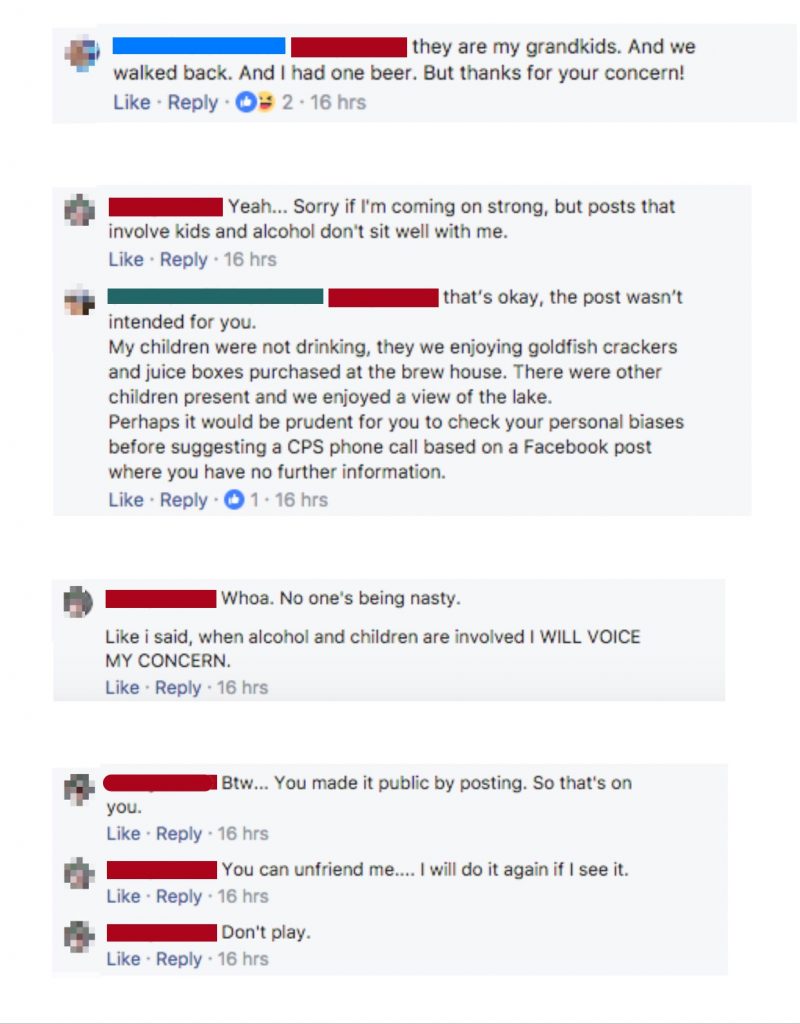
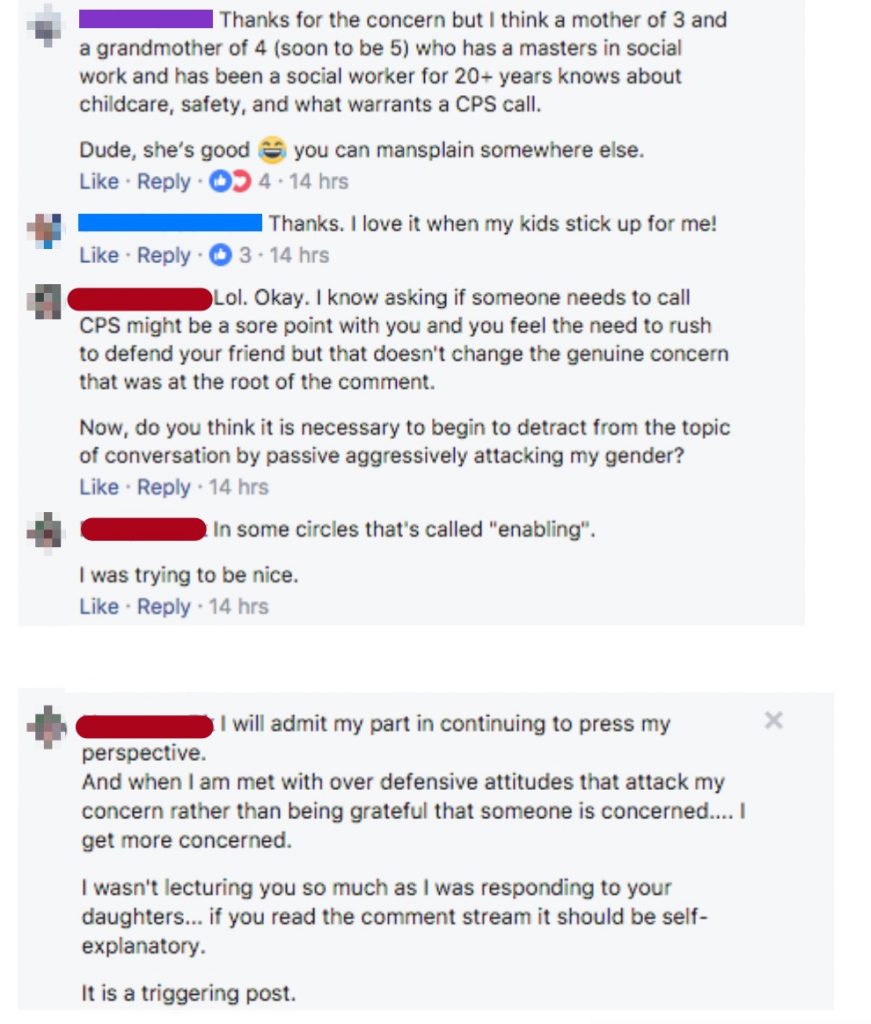
Recently, a young man responded to a post that my wife, Sanderijn, put on her Facebook page.  What followed is something you really need to read for yourself to fully appreciate but the quick summary is this.

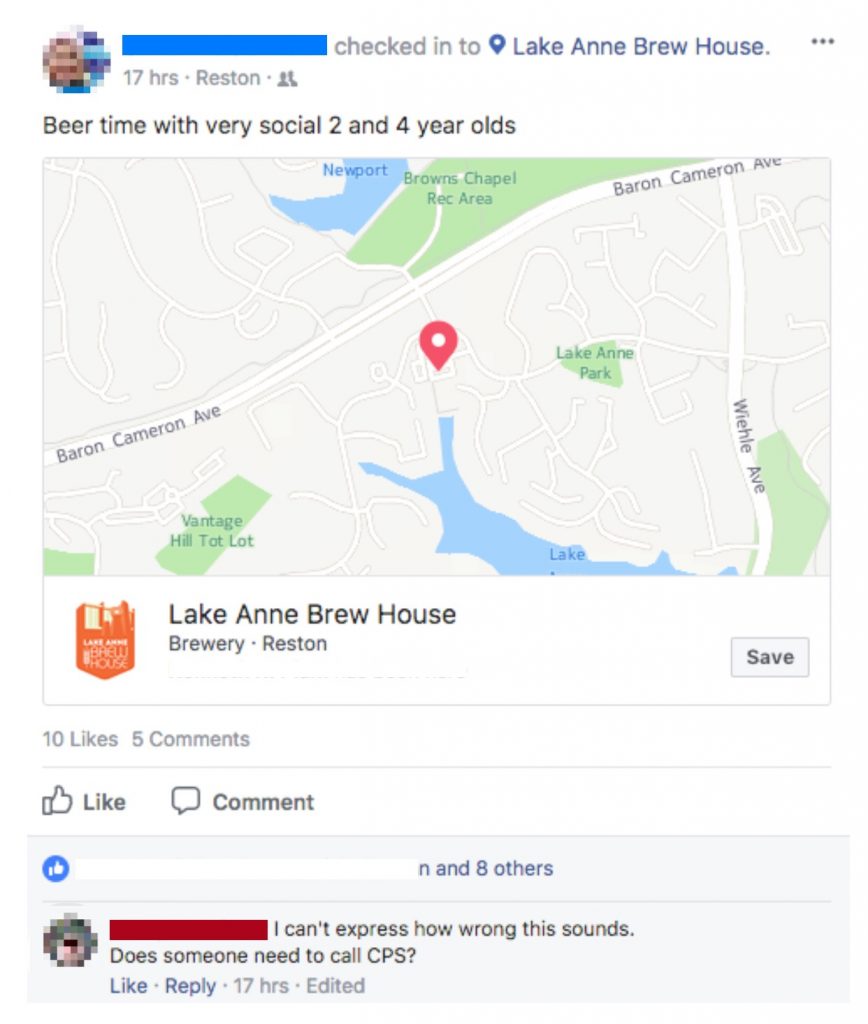
Our daughter, Sarah, and her two children were in town for the weekend. Sanderijn, Sarah and Sarah’s two boys aged two and four, decided to enjoy the Friday autumn afternoon by walking down to Lake Anne Plaza. Once there, Sanderijn “checked-in” on Facebook at the Lake Anne Brew House with the post “Beer time with very social 2 and 4-year-olds.”

Someone was not amused. He wrote “I can’t express how wrong this sounds. Does someone need to call CPS?”

(Note. For the uninitiated, CPS stands for Child Protective Services, a Virginia government body whose mission is reflected in its title).

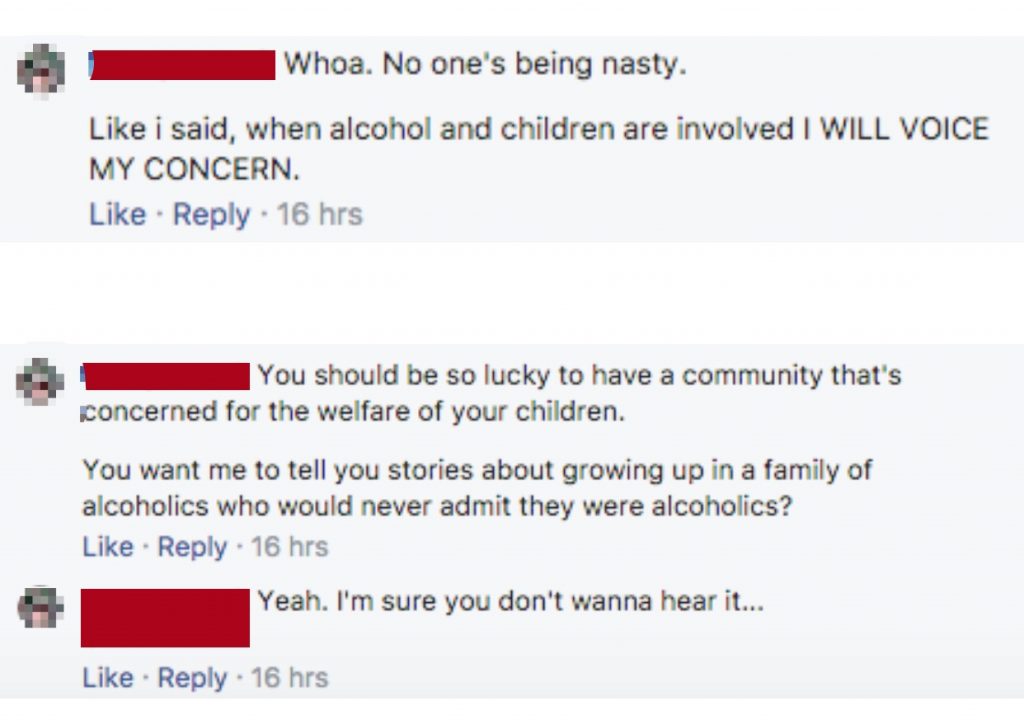
What followed was a marvelous (and personal) example of three ways social media is destroying civil communication. As a communications professional, it is something I will quote at length in future presentations and lectures.

First, the reaction by a person who will go by the name of “Mr. Bk,” along with his following comments, is a case study in “virtue signaling.”

Virtue signaling is when someone uses social networks, in this case, someone else’s post, to show others how morally correct they are. In this case, one Mr. Bk is signaling his moral superiority by (continually) noting his compassion and in this case concern, for children being exposed to someone drinking a beer in public.

Oh, the horror!

After his initial, ill-informed righteous outrage, he follows by constantly reminding us of his benevolence, patience, wisdom, search for truth, care for humanity, and steadfast purity of spirit. He even goes so far as to remind readers they should be grateful and that we are so lucky to have people like him around.

This is the wonderful thing about virtue signaling:  you can claim and broadcast your piety and virtue through social networks without actually having to do anything to merit it.

Second, the Facebook exchange is an example of how communicating through social networks makes you stupid. We think the Internet makes us smart. It doesn’t. It lures us into doing and saying stupid things because doing and saying stupid things are now so easy to do.

Hit a few buttons and “poof”! You’re in someone’s face. And you’ve written something stupid. No knowledge or context needed.

The irony here is that a simple 10-second search by Mr. Bk would have shown that the Lake Anne Brew House is located in Lake Anne Plaza, Reston, Virginia, a wholesome family and child-friendly lake development with fountains and play areas and kids joyously running and screaming and doing what kids do in a fresh open-air environment. He would have also found that the Brew House serves apple juice and kids snacks, that it is adjacent to a Baptist church and coffee shop, and that across the plaza is a used bookstore with a wonderful selection of kids books along with a second-hand children’s clothing store.

But no.

The ease and ubiquity of social networks – which we can carry with us and never leaves either our hand or watchful eye –  give us access to others 24/7. These mobile devices act as technological sirens, who, like those of Greek mythology, lure consumers into countless acts of ignorance, typing and posting without making any effort to determine or deal with reality.

Instead, we see the word “beer” followed the phrase “4-year-old” and immediately express a virtual “OMG!, some drunken sot is dragging innocent babes into the devil’s chamber” and wonder aloud if someone should call 911 and child protective services!

The ease and speed of social network communications mean we often speak first, think later. That’s a bad combination.

Side note. Mr. Bk’s rants are also a good example of the well-known cognitive bias called “anchoring.” That happens when you stick with an initial position even after being confronted by conflicting facts – in this case being told that the initial post was from a mother, grandmother, and social worker of 20+ years who has spent a good part of her life working with children and youth to try and help them escape from real risky and abusive situations. That the grandmother walked to the plaza (Mr. Bk at one point suggested everyone call a cab) and had a single beer.

None of this information impressed Mr. Bk.

He stuck by his figurative guns and insisted not only that he did the right thing, but that he would do it again and that, yes, we should be grateful for him doing so. Indeed, he found it “disturbing” that we didn’t care much for his ill-informed post and decided not to shower him with praise.


Finally, it was a wonderful example of social media troll behavior.

A social media troll always has to have the last word. They can’t let something go. They become so intoxicated with themselves and their posts (which they consider an extension of themselves … perhaps even more important than themselves!) that they HAVE to respond.

In the example above, Mr. Bk not only has to have the last word with others but he amazingly also has to have the last word with himself, often posting a series of replies absent anyone else commenting or saying anything.

For these people, their position is so correct, their thoughts are so right, and everything they think is so important for people to understand and accept, that they post unceasingly in a desperate attempt to force their views upon others.

So this is this is how social media and social networks have warped the world modern social interaction.

A place where people use social networks to draw attention to their moral superiority.

A place where there’s a premium on saying something before thinking something.

A place where people become so addicted to their own voice and seeing that voice in print, that they are unwilling and unable to stop themselves from perpetuating meaningless half-truths.

And yes. All this is why the United States has the president that it has today!

.

Click

... ten years worth of thinking, creating, writing was gone.

It was the simple flick of a switch.

It apparently wasn’t a physical switch like the light switch jutting from a wall. Rather, it was likely a swipe or click. A simple movement of a finger over a plane of glass or the pressure of a hand placed on a button while the pointer hovered over a two-dimensional image on a screen.

But a flicked switch nonetheless. With it, ten years worth of thinking, creating, writing was gone.

For the few of you out there that follow the JuiceBar, you may have noticed that for several weeks – nearly a month – the blog lost all its content. It was a colleague at work who gave me the heads up (thanks, Jane!). So I checked. I went to the site and every post was gone. It was as if someone had come in, opened all the files, put them in a suitcase, and ran off.

Ten years of posts. Gone. Vanished.

Part of me was devastated. Gone was the eulogy I wrote for my Mom on Christmas Eve, the day I learned she had passed away. Gone were posts I had written about my Dad on Father’s Day. Gone were the posts about my daughter’s wedding. Gone the post about my grandson’s interaction with a beetle and blackbird. Personal things. Serious things. Silly things. And yes, some pretentious and plodding things.

All were gone. Both the wheat and the chaff.

I spent days trying to figure out what happened. In the end, a consultant who was working with us and the hosting company said it was a simple mis-administered switch.

An errant click.

I’m happy to report that things are back to normal. But it did make me think a lot about how much of my life is invested in things that are nothing more than digits on a server. Things that with a simple errant click can disappear.

On a practical level it makes me appreciate physical things like paper, photo albums, and books. Sure, they can suffer the same fate, as folks in Houston or Key West or San Juan know all too well. But I am going to try to write more in journals. Print more on paper. Rediscover the file folder.

But in the end, this event reminded me of the transience of all things physical. Whether you keep them in the cloud or keep them in the closet. One you can lose to a hacker, you can lose the other to a flood.

What is lasting are relationships.

What is lasting are feelings.

What is lasting are those things that inspired your life, formed your life, shaped you and your family.

What is lasting those things that … well … last.

Think and focus on those lasting things.

And know that lasting things can’t be eliminated by a click.

Signs and Symbols

Signs and symbols

I think we should pay a lot more attention to signs and less attention to symbols.

Let’s start with whittling down our obsession with symbols.

What are symbols? They are things that represent an idea, person, process or thing.  They aren’t inherently bad. In fact, they can do a lot of good. Countries and cultures have them – typically in the form of an animal or flag or both. Each of the monotheistic religions has a symbol: a star, a cross, a crescent. There is the venerable symbol for peace, the circle with the lines thing, there’s the two-fingered victory symbol, and there’s the horrific symbol of fascism, the swastika. All inspiring in their own way.

But there are the other symbols, the ones we could and should pay a lot less attention to. They are the symbols we create to satisfy what we can’t fully grasp. Symbols are, by definition, simplified labels. And because of that, they rarely fully capture the complexity of the true nature of the idea, person, process or thing they purport to represent. This is particularly true when that symbol is applied to a person or persona.

  • The symbol we create when we see the dreadlocked twentysomething African American male, dark glasses, a hooded sweatshirt and baggy pants
  • The symbol we create when we see the round-bellied truck driver with a long drawl, heavy beard, tobacco-stained camo t-shirt and gun rack
  • The symbol we create when we see the long-braided, fair-skinned yoga instructor in designer leggings and delicate ankle tattoo, sipping herbal tea

These are symbols just like the peace sign, victory sign, and swastika. When you read them – just as when you see these physical symbols – you likely had some reaction to them. You probably inferred a lot about that person’s upbringing, their politics, or whether you’d enjoy their company.

Symbols are handy because they are simple. But that is also what makes them dangerous. When assigned to people they can lead to three very bad things.

  • Symbols rob people and things of their intricacy and nuance. They can make things unidimensional. And neither things nor people are unidimensional.
  • Symbols absorb stereotypes like a dry sponge. They allow us to create meaning but in doing so they allow us to insert all the prejudice and preconceptions not just from popular culture but also our individual and community biases.
  • Symbols unite through division. They inevitably draw people inward and have them define themselves in opposition to “the other.”

Carl Jung distinguished between symbols and signs saying that symbols represent the unknown while signs point to what is known.

I think we all could use a bit more focus on those things that we know, and less on conjecture and those things that are beyond our knowing.

That is where signs come in. There are a lot of signs around us. They are most often hidden in things we already know and experience. These signs aren’t abstract. They point to things that are happening, things that are real. There are signs of what is happening to our politics, our economy, our environment, our families, our health. Signs are everywhere. We just don’t take the time to see or make sense of them.

Unlike symbols, signs don’t claim to possess the truth. Rather they point us to facts and those facts, which in turn, point us to truth. In that way, signs are much more humble and modest than symbols. (And Lord knows that this world could use more humility and modesty.)  But in another sense, that is exactly why we often choose to ignore or not look for signs. Because facts, reality, and truth can be very difficult.

So we fall back to the comfort of our biases and our symbols.

In her book “The Signals Are Talking,” author Amy Webb claims that if you can identify and correctly interpret signs or signals, you have a reasonable shot at predicting the future.  I’m not sure about that.

But she also says that only by identifying and reading “signs” or “signals” do we have a reasonable shot at shaping the future.  In that, I firmly believe.

So look around you. Set aside all the symbols that you have in your life.  Focus on opening your eyes and minds and look for signs.

What signs do you see?

If we can agree on the signs, we might be able to agree on a common direction.

And if we do that, perhaps we can do without all those symbols.