Posts from the “Compassion” Category

The Beauty of Doubt

Doubt

Almost four years ago to the day, I wrote a piece titled “Truth takes a beating …” In it, I lamented the rise of “fake news” and the new category of “alternative facts.”

Not much has changed. If anything, things have gotten worse. Truth finds itself more under assault than ever before. That said, I still have faith that while truth “might lose a battle or two, it always wins the war.”

Over the years there has been another casualty. And that is the vilification of doubt: the belief that doubt is weakness, that doubt is unprincipled, that doubt is evil.

I believe in the beauty of doubt. I’ll go one better. I believe in a God that embraces and works through and with our doubt.

Consider this. In the book of Matthew, Jesus said that “among those born of women there is no one greater than John the Baptist.” Wow. That is a pretty high complement from the Son of God. Yet only a few pages later in Matthew’s same account, this same “no one greater than John” guy asks whether Jesus is “the one?” That is, he doubts.

He asks through his buddies “are you the One or should we be waiting for another?” This is John the Baptist – the same John who baptized Jesus in the River Jordan, the same John who heard God’s voice, the same John who saw the “Spirit descending like a dove.” Still, despite ALL that, John had doubts.

I wonder. Could John’s doubts have been one reason Jesus considered him so great?

I believe there is beauty in doubt. Doubt elicits the winsome qualities of humility, modesty, and open-mindedness. By contrast, the absence of doubt brings out ugly elements of cocksure self-righteousness.

I believe there is community in doubt. Doubt’s questioning, it’s hesitancy, encourages re-examination, inclusion, openness. Doubt’s absence invites isolation, segregation, and discrimination.

Finally, I believe there is wisdom in doubt. Doubt keeps our minds open, inquisitive, wondering. Without it, there is no exploration, no inquisitiveness, no investigation.

To be clear, I’m not suggesting that we not stand firm in our convictions – that we not stand up and speak out in defense of the beliefs, principles, and morals we hold dear. No. Not at all. Stand tall. Stand strong.

Rather, I’d say we follow St. Peter’s advice to “always be ready to give a logical defense” of our faith but to do so “courteously and respectfully.” Indeed, other Greek translations of that last phrase admonish us to do so “with meekness and fear.”

Not quite, doubt, but close.

Gratitude.

Gratitude.

It can change your brain.

It can make you healthy.

It can make you happy.

But if you buy into gratitude for those reasons, I think you’re missing the point. You may not even be expressing “true” gratitude at all.

Gratitude has been defined as the “readiness to show appreciation for and to return kindness.” I like that. Recognizing and returning kindness. We often talk about the former – recognizing. We rarely think of the latter – returning. Gratitude goes beyond acknowledgment. It is an obligation – no, a true desire – to be compassionate towards others.

Today is Thanksgiving Day. One of my favorite holidays. I know there are the banal and commercial elements surrounding Thanksgiving’s origin, propagation and celebration. But let’s set the storefront parade, football games, and Black Friday aside for a moment and think of what it means to be truly thankful.

The beauty of thankfulness is that it is something that everyone can enjoy. From the most popular, affluent and talented to the forgotten, impoverished and plain. Thankfulness is accessible to anyone regardless of origin, condition, and belief. To be sure, gratitude is much more difficult for some than others. Hard for someone in Aleppo to be thankful. Or those who suffer from illness. Or those who have lost jobs, possessions, health, loved ones … perhaps even themselves. But gratitude isn’t comparative. It is not about being thankful that you’re not like the other. It is about being thankful for who you are what others have done for you regardless of station. It is about showing appreciation for others and their acts of kindness both large and small.

I have been blessed beyond merit because I’ve merited little. So thanks. Thanks to all of you out there who have looked past my and others’ faults and have shown grace and kindness.

Thanks to those who’ve suffered through much and still persevere. Thanks for another day to try and the opportunity to do something – even a small thing – that makes things better. Let’s try to be thankful not for the sake of how it might help our brain, our health, or our happiness. But let’s be thankful because it is a proper response to the life we’ve been given.

Happy Thanksgiving.


Justice

j juice bar justice long

Justice.  It is a good thing, right? But what exactly is it?  How does justice happen?  And how do you pursue “justice” in a way that gives some opening for that other great thing we call “mercy?”  (I am convinced that if justice is simply defined as “eye for an eye” and “tooth for a tooth” then we’d all be blind and toothless.)

Recently Pope Francis called for the end of the death penalty and lifetime imprisonment.  He called these acts “penal populism”.  He said they “promise to solve society’s problems by punishing crime instead of pursuing social justice.”

What is the difference between “punishing the crime” and “pursuing social justice?”  I found out a couple of days ago from a young man named Fritz Howard while spending a week at Tubal, a Christian vocational school just outside of Belize City.

Mr. Howard is the man kneeling in the photo.  You really shouldn’t mess with him.  An imposing but approachable man, he has dedicated his life to working with young men who are “at risk”.  Before his current job, he ran vocational programs and ministry at one of Belize’s largest prisons.  Now he is the full-time construction teacher at Tubal, a school for young men and women .

Mr. Howard was a wonderful teacher and mentor.  It was clear that these young boys held him in high respect.  For them, Mr. Howard was simply:  “sir.”

A group of us worked side-by-side with Mr. Howard and several young men building a house for a woman in need.  Every day we’d head over to the work site early in the morning, come back to the school facility for lunch, then back to the site for several hours in the afternoon.  All in 90 degree heat and humidity.

Now the students at Tubal are wonderful young men and women.  Respectful.  Hard working.  Considerate and caring for each other.  They were a joy to work with.  But kids are kids and sometimes they do stupid things.  And one day, a while we were at lunch, someone – almost certainly a student – carved  into the leather seat of Mr. Howard’s motorcycle something, well, stupid.

Mr. Howard walked over to the bike which was parked underneath the canteen where the kids hung out.  There was a quick conclave with students.  As much of the dialogue was in creole, I didn’t catch a lot of it.  But I could tell by the tone that it was, well, intense!  The group dispersed and soon there was a bit of buzz about a boy identified as the (extremely) likely suspect.

A few of us jumped into the van heading back to the work site.  I talked to Mr. Howard about the incident.  He was understandably very upset.  But what I found fascinating was I didn’t sense he was wasn’t “mad” or “angry”.  He was wounded, hurt, concerned, troubled.  But not angry.

He took a call from someone.  I don’t know exactly who it was.  Likely someone from the school.  Tubal has a “zero tolerance” policy – a “one strike and you’re out” type of place.  And I could only guess what was what was being proposed on the call was to expel the student. But Mr. Howard had a different perspective.  What I heard him say on that phone call went something like this:

“I don’t want to kick him out of school.  If we do that he’ll learn nothing.  He will only end up being bitter about himself, bitter about the school and get in trouble with his relatives and bitter about that as well.  No.  We’ve got too much of that bitterness already with these kids.  

And I don’t want a written apology.  Written apologies don’t accomplish anything.  It is just a piece of paper. It means nothing to me and it won’t mean anything to the young man. 

No, I want this boy to stand in front of the class, admit what he did, apologize, and explain to me why he did what he did.  I want him to do this in front of everyone. Every student from the school. 

We need to show this young man that he always has the option of acknowledging his wrong-doings and taking responsibility for them.  He needs to be able to learn to do that – learn to humble himself – yes, even humiliate himself – stand up and admit to everyone what he has done.  And the other boys need to be able to see this young man do it.  He needs to confront this, apologize and explain this to me and to everyone. That is all I want.  Nothing more.  Nothing less.  

Have him do that.  I will accept his apology.  We will shake hands.  Then we will put this behind us, and he and I will go from there.  Then we can build things back up.  Then I can help him and teach him. He can stay, learn, and make something of himself.  

 If he’s not willing to do that then I agree he’ll have to go.  But we need to give him a choice and give everyone a chance to confess, seek forgiveness and following that, know they can have acceptance.”

It was perhaps one of the most brave, constructive and genuine attempts at “justice” I had ever seen.  Mr. Howard insisted on “pursuing social justice” over “punishing the crime.”

I think Pope Francis would have been proud.

Valentine’s Day: What is love? Part I

What is love and what does love have to do with brands, organizations and business?

Good question. I don’t know for sure but that’s never stopped me before.  Plus the Sunday lesson this morning was love and we’re closing in on Valentine’s Day.  I got inspired.

At the risk of violating rules for both civil and faith-based discussion in post-modern society I thought I’d try and answer the question by combining Christian scripture, secular business principles and a bit of humor.  And to make the risk greater, I’ll use one half of perhaps the best known verse of scripture , John 3:16.  For those averse to matters of faith and religion, don’t worry.   No moralizing.  I just hope you’ll still find something here that you agree with and find mildly insightful.

With that, here’s part one of three.

John 3:16 starts: “For God so loved the world …”.

Such a simple statement.  God loved the world.  Actually, John wrote “so” loved the world which I’ll interpret to mean that He loved it a lot.  What does that tell us about nature of love?

For me, it is this:  Love is a decision.

Love is not something that happens to you. Love is something that you make happen to yourself and others. It is not an emotion, feeling or phase in your life for relation.  It is a decision you make. I think what John is saying is that God “decided” to love the world.  Some may challenge that and say, “Hey, Jerry, the world’s a pretty awesome place!  God just fell in love with it!”  Maybe it went something like this:

“Oh!  Look at that pretty little blue place that I made!  It is so cute and adorable.  Everything there is so beautiful and lovely.  It is my favorite vacation spot.  The people are so nice.”

I don’t think so.

Sure, we’ve got the Grand Canyon and all. And there are a lot of very wonderful people in the world. But peel back the layers of our planet earth – the world – and the place is pretty terrifying.

Animal world? Check out a NatGeo video of some tiger methodically stalking, catching and bloodily piece-by-piece tearing apart the flesh of a baby zebra while it writhes in pain. You can have all the Disney talk you want romanticizing the ‘circle of life’ stuff, but in the real world what you’re really talking about are animals savagely stalking and eating each other.   Nature = strong eat the weak.  Fascinating, yes.  Even beautiful?  Perhaps.  Something that you’d decide to love?  Not so much.

Then turn to the world of people.  Sure there are some nice people out there.  You and me, right?  But even we do some horrific things.  Here’s a test. Take two perfectly wonderful, pleasant, well-behaved and lovingly adorable three year olds. Put them together on the floor in a room.  Now set evenly between them a very cool toy to share. Stand back and watch.  Trust me. It is going to get ugly in a hurry.  Within five minutes, screams.  Within ten, grabbing, biting, and gouging.  Anyone who has had children will confirm this.   And as for adults and all our own private neurosis and objectionable behaviors? Let’s not go there. No, people can be pretty hard to love. Even the ones that on the outside seem nice.

And nature? Forget about it! For every beautiful sunset and mild ocean breeze there’s a Jakarta tsunami and Hatian earthquake. Nature may be a lot of things but three things it totally lacks are compassion, forgiveness, mercy. No, nature is about as far away from love as you can get.

No. I’m thinking that what John was writing about was a clear, concious decision by a God to love the world. However it was, love was a decision.  It was a choice.  It is not something that happened   It is something that was made to happen.

So what in the world does any of this have to do with brands and business?

Think of it this way.

Loving your employees or loving your customers does not just happen.  In business, love does not come naturally.  Sometimes employees and customers can be a handful (remember the story of the three-year-olds?).  If you’re going to really care about what you do and who you do it with – I mean REALLY care about them – it is going to be something that you’re going to have to decide to do.  If you wait for it to happen, it won’t.  Trust me.  This stuff isn’t like a scene from The Titanic. Real love, the love that matters and lasts and changes lives and is meaningful – that love is something you choose to create. It is a decision that an organization or brand makes a conscious effort to act upon.

Companies that are consistently voted as the best place to work have DECIDED to be the best place to work.  Companies that have the most ardent and loyal customers have DECIDED to show their customers respect, affection and support.  If an employee or customer says they LOVE this or that brand, organization or company … you can bet that long before they realized or said it, someone made a decision that this is what they wanted to have happen.

They made a decision that the relationship they were building was not just based on making the most money, getting the cheapest price, or being a matter of convenience.  It was going to be more than that.

Love doesn’t just happen.  Love is a choice.

Tomorrow:  love is a verb.
Misspent Youth

I have one of these.  A misspent youth, that is.  A lot of us would confess to one and that’s ok.  Too late to reconstruct, excuse or otherwise rehabilitate it.

The more pressing question is whether we are ‘misspending’ the youth of today?

This goes beyond the fact that my three children are all twentysomethings.  But they’re having the same struggles that millions of other young people are facing today – finding their way amidst a severe economic crisis, a tectonic demographic shift, sclerotic government, and a fiscal calamity that would make Old Mother Hubbard’s dog feel fortunate.

Our youth are our future.  A trite saying but nonetheless a tautology of the first order.  They are what the world will be.  And they’re not feeling that great.  Tamar Lewin of the New York Times writes about stress levels of college students being at an all time high while an annual survey of college freshman suggests the emotional health of our nation’s youth is at an all time low.  According to the survey:

Campus counselors say the survey results are the latest evidence of what they see every day in their offices — students who are depressed, under stress and using psychiatric medication, prescribed even before they came to college.  The economy has only added to the stress, not just because of financial pressures on their parents but also because the students are worried about their own college debt and job prospects when they graduate.

The anxiety isn’t confined to Americans.  In another New York Times piece, Martin Fackler writes about the plight of Japan’s youth.  They are the next generation who have grown up in ‘the lost decade’.  They don’t see much light at the end of that tunnel.

“There is a feeling among young generations that no matter how hard we try, we can’t get ahead,” said Shigeyuki Jo, 36, co-author of “The Truth of Generational Inequalities.” “Every avenue seems to be blocked, like we’re butting our heads against a wall.”  An aging population is clogging the nation’s economy with the vested interests of older generations, young people and social experts warn, making an already hierarchical society even more rigid and conservative. The result is that Japan is holding back and marginalizing its youth at a time when it actually needs them to help create the new products, companies and industries that a mature economy requires to grow.

This is a global phenomenon.

Look around.  Tunisia.  Egypt.  Around the world we’ve been short-changing the next generation.  We — the boomers and Xers — have made a lot of bad decisions.  The next generation is figuring it out.

We can still change but time is running short.

And whatever changes we refuse to make, our young people will make for us.

The Reverend Martin Luther King Jr.

This is a post about being a Christian.

Today there are a lot of people writing a lot of posts and articles about the Reverend Martin Luther King Jr.

And well they should.  He was a great man whose vision, oratory, writings and tireless work inspired a nation to turn away – albeit slightly – from bigotry, racism and hatred.

And it is his social and political accomplishments that you’ll likely read most about today and tomorrow.  His speeches.  His marches.  Lunch counters. Protests.  Non violence.

But I want to remind others – as I remind myself – that Dr. King was a Reverend.  A preacher.  A man of faith.  A Christian.

Funny how most of us gloss over that.

I bought my wife one of Dr. King’s books for Christmas.  It sits on the coffee table.  The title of the book is Strength to Love. According to Dr. King’s wife:

“If there is one book Martin Luther King, Jr. has written that people consistently tell me has changed their lives, it is Strength to Love.  I believe it is because this book best explains the central element of Martin Luther King, Jr.’ s philosophy of nonviolence: His belief in a divine, loving presence that binds all life. … By reaching into and beyond ourselves and tapping the transcendent moral ethic of love, we shall overcome these evils.”

Read the book.  If only a chapter or two.

And if you do I challenge you to try and divorce Dr. King’s vision of a world where ‘a man would be judged by the content of his character, not the color of his skin’ from his Christian faith.

His understanding of racism and bigotry was an understanding of how profoundly sinful we all are.  And his belief in non-violence and sacrifice was tightly linked to his meditations on Jesus and the cross

Read Dr. King.  And be reminded of the real meaning and spirit of the Christian faith.

You might find it very different from the Christian faith you see in popular culture or hear in political dialogue.

Jesus said that if we have the faith of a mustard seed we can move mountains.  Dr. King’s faith moved an entire generation.

Read Dr. King.   And pray that more will be inspired to, like Dr. King, recapture the revolutionary loving spirit of the Christian faith.

Is social media small change?

The latest kerfuffle in social media circles has been Malcolm Gladwell’s recent piece in the New Yorker headlined “Small Change.”

In it Gladwell has the temerity of asserting that social media’s impact on social change is not all that it is cracked up to be.  Some of his jabs are sharp.   Like calling innovators ‘solipsists’ and saying that ‘they’ – that is the vaunted social media futurist gurus – ‘often want to cram every stray fact and experience into their new model.’

Ouch!

Gladwell’s argument is characteristically simple and trenchant – that online social networks do not engender either the strong commitment (and risk!) nor the organizational structure that make for social change.  Using the civil rights movement as an example, he notes that real change – substantive action in the face of entrenched power – is not social media or social networking’s strong suit.  Social media, Gladwell writes:

“is simply a form of organizing which favors the weak-tie connections that “give us access to information over the strong-tie connections that help us persevere in the face of danger. It shifts our energies from organizations that promote strategic and disciplined activity and toward those which promote resilience and adaptability. It makes it easier for activists to express themselves, and harder for that expression to have any impact. The instruments of social media are well suited to making the existing social order more efficient. They are not a natural enemy of the status quo. If you are of the opinion that all the world needs is a little buffing around the edges, this should not trouble you. But if you think that there are still lunch counters out there that need integrating it ought to give you pause.” (my emphasis added)

This bold assertion – that social media is just window dressing and doesn’t represent any fundamental change in how social change is achieved – has got the preachers of social media gospel in a tizzy.

One writer on MediaPost blasted back with an article eloquently entitled, “Malcolm Gladwell is Wrong, Wrong, Wrong.”

Clearly Mr. Gladwell has hit a nerve.

And in my view rightly so.  It is still early in the social media revolution.  But what we have seen to date doesn’t appear to have prompted many fundamental changes in attitudes, behavior, norms, or even public policy.

One of the better rebuttals comes from Brendan Smith and Jeremy Brecher.  In it they quibble with many of the characteristics that Gladwell attributes to past social movements.  But their main point is to remind Gladwell (and all of us) to keep a clear distinction between social media as a tool and social media as an end in itself.

“Gladwell is surely right when he says social media ‘are not a natural enemy of the status quo.’ But that is only the beginning of the discussion. The pertinent question is whether social media can contribute to the process of forming social movements and effective social action, not whether social media can substitute for that process. (A telephone system is not a PTA, but it can sure as heck be useful for getting a few hundred people out to confront the school board or vote in the school board election.)”

That is — in the JuiceBar’s view — the better way to look at this.  Social media and social networks are tools.  They are to the 21st century what the telegraph was to the 20th (although I must say that better stories came out of the events around the Pony Express than out of the building of the telegraph network.

But Gladwell’s most damning criticism is the inherent conflict that arises when information and content are ‘free’.  And that is the simple fact that sustaining value and relevance is difficult when everything is free and no one has a price to pay.

Our certain future

I am constantly amazed.  Not only that.  I seem to be constantly amazed at things that happen … well …  constantly.  You’d think that seeing something over and over and over would eventually wear you down and erode wonder, awe and amazement.  Not for simple minded people like me.  I sit back and watch people do the same silly thing over and over.  And I say to myself, “wow!” … “that is amazing!”

What the heck am I talking about?

It is the audacious certainty with which people predict the future.

toy2r-emilio-garcia-jumping-brain-toyAnd I’m not talking the simple stuff.  Things like, “if you don’t brush your teeth will rot.”  Or, “if you constantly lie eventually people won’t trust you.”  Or, “if you’re disciplined and sacrifice today you can reap the benefits tomorrow.”  That is the simple stuff … the natural and predictable consequences to simple actions.

No, I’m talking about situations that are hopelessly complex, that have multivariate and fast changing events, that computers the size of Big Blue could never figure out.

But here we are with our little 3 lb brains and not only have we figured it all out (and well into the next decade no less!) … but we do so with  absolute, unapologetic and unqualified certainty.

This is more than just the “half full vs. half empty” syndrome.    It is not a question of style, character, or even slant.  It is the ability of people to see the same data, the same information, the same images, the same facts and draw opposite conclusions with the certainty of the sun coming up tomorrow.

Welcome to the health care debate.

  • It will decrease the deficit.   And it will raise the deficit.
  • It will increase abortions.  It will decrease abortions.
  • It will help business.  It will hurt business.

The Wall Street Journal says that health care reform is leading to the “wholesale destruction of wealth and capital.”  The White House says it simply is closing a loophole.  According to one Congressman the health care reform will lead to more aborted babies.  According to Bart Stupak nothing changes.  According to columnist and commentator Fred Hiatt health care reform is a ‘fiscal catastrophe.’  According to a former official of the Congressional  Budget Office, Mr. DeWater, it will reduce the deficit.

No wonder the media reports that the average American is confused.  The so-called ‘experts’ are not only disagreeing.  They are violently disagreeing with even more violent confidence and conviction.

I suspect that the average American isn’t as much confused as he or she is simply recognizing the simple fact that all the “experts” ignore.  We just don’t know exactly what is going to happen.  There’s some good.  There’s some bad.  There’s some risk.  There’s some opportunity.

But we just don’t know.  None of us do.

In many ways the health care reform package is a lot like life.  It is hard to know what the future holds.

So what do you do?  You go back to those simple, historically proven, reliable things you can depend on.

Like brushing (and flossing!) so your teeth don’t rot.  And telling the truth so you can earn someone’s trust and confidence.  And working hard and sacrificing today so you and your family can benefit some day down the road.

As for the other stuff, it would be refreshing if someone said what everyone else has already figured out:

“Who knows?”

More human and political insight from my therapist

Let me be clear.  I’m not in therapy.

Maybe I should be.  Nothing wrong with it.  Just not for me right now.

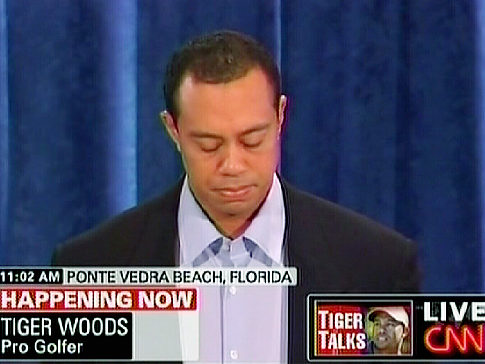
By “my therapist” I refer to my beloved and longsuffering wife the social worker and therapist who explained to me and for all of us the real story behind the Tiger Woods ‘apology’.

obama-carex-inset-communityRecently she enlightened me on another recent event – the President’s health care reform summit.
Did you see it?  Any of it?  I found it fascinating and apparently others did as well.  There was so much interest that it crashed some of the sites that were carrying it live.

If you did see it you may remember the opening by President Obama and his desire to focus on the positive things they can agree on.

Focus on the positive.  Talk about things upon which we all can agree.

It went down hill from there.  Apparently the one thing they couldn’t agree on was to focus on what they agreed on.  What they did seem to agree on was sniping, digs, invectives, and occasional ad hominems – typical political talking points.

As my wife explained it, this was (like the Tiger episode) therapy in motion.  Again, let me paraphrase:

It looked like some of the first sessions you have when you are working with dysfunctional families, spouses, or parents with their children.  You always start with asking them to identify positive things about each other.  It never works.  Never.   Every time they come back with criticisms.   You’re not five minutes into the session and people are screaming at each other, letting loose f-bombs and a host of  “asshole”, “jerk”, “bitch” commentary.  They just have all this pent up anger and hate for each other.  They want — no, they need — to get all that stuff off their chests and on the table for everyone — at least the ‘independent’ therapist — to see.  They can’t help it.  They just have to go negative before they can begin getting to the positive.

The problem with the President is that he didn’t do this sooner and didn’t do it long enough.  You can’t do therapy in one session.  You only get people to move over time, little by little.  You have to wear them down.  If the President had done this twice a week for six months, I bet he’d have gotten folks to open up and talk about those positives.

But like therapy, this stuff takes time.

My therapist!  She’s not only beautiful but absolutely brilliant!

Tiger Woods: Making Amends, Not an Apology

The problem with most people’s view of the Tiger Woods apology is they view it as making an apology — not as making amends.

There have been no shortage of critics of the Tiger Woods’ televised apology.

George Will said of it on ABC News, “if your problem is that your behavior has revealed your public persona to be a fake, you shouldn’t stage this grotesquely fake press conference.”  The folks at the industry publication “PR Junkie” had a field day.

It was awkward, and it felt like one of those hostage videos when someone is forced, at gunpoint, to read a statement damning his or her nation and culture.

Even gold medal skier Lindsay Von got into the act.

alg_tiger_woods_pressNot only do we have a plethora of experts on public apologies, it seems that a good portion of those experts have about as much compassion and forgiveness in them as Nurse Ratched.

Clearly there’s a good portion of the public out there who never think along the lines of “there but for the grace of God go I.”

Tiger Woods is a dog that is down and there sure seems to be a lot of kicking going on.

Good for him?  Not really.  Good for us?  Absolutely not.

I look at it very differently and have my wife to thank for that.  Yes, my wife feels bad for Tiger Woods.   You might think that wives would be the first to cast a stone at Woods.  But you see my wife is a social worker.  She sees stuff like Tiger Woods all the time.  Much worse, actually.  She not only works with people that have addiction problems, she works with their victims as well.  She’s no softie when it comes to this stuff but I’d argue that she has more real world experience — and perhaps even more moral standing — to comment on this type of behavior than do Mr. Will or Mrs. Von.

Her reaction to this video was (and I’m paraphrasing):

This is a man in therapy.

His apology is not an apology, it is an effort to make amends.  Go read the twelve step process.  He is on the middle steps.  He went through each group of people that he hurt.  One by one.  Apologized to each.  Said it would be actions not words.  He’s doing exactly what he is supposed to do.

Let me tell you how awful the type of therapy is that he is going through.  It is humiliating.  It is degrading.  You have to accept that you’re a pervert.  A predator.  A sicko.  It isn’t pretty.  He’s not apologizing in the sense that people know it.  He’s trying to make amends to those he hurt.  He’s doing what he’s supposed to do.

I Feel for him.

That, my friends, is the attitude of compassion.

Criticize the apology and Woods all you want.  What was most interesting to me was that his focus WAS NOT golf, the Masters, getting back to the game. His timetable appeared to be in function of his ability to climb the twelve steps of recovery.  And I saw Friday’s televised event as him working on steps 8 and 9:

“make a list of all persons we had harmed, and be willing to make amends them all; and make direct amends to such people wherever possible, except when to do so would injure them or others.”

Can’t fault a man for that.

In fact, isn’t that something everyone should consider?