Archive for the 'Social media' Category

A social media lament … Jaron Lanier’s “You Are Not a Gadget”

Monday, February 15th, 2010

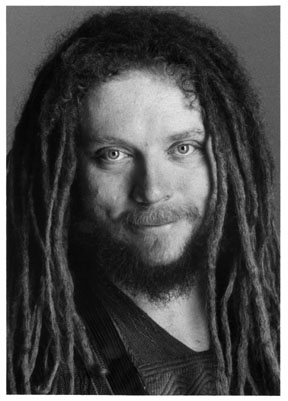
I’d like to introduce you to an important book.  It is Jaron Lanier’s “You Are Not a Gadget:  A Manifesto.”

But first, a few questions.

How are you?  Everything good?

How about your life on social media?  How is that going?

jaron_lanierHave you updated your blog? Gotten any comments lately?  Any trackbacks?  And your Facebook page?  What is your friend count?  Who’s writing on your wall?  How about your Twitter feed?  Have you checked in with your Google account?  Gone through your Google alerts?  Charted your progress with Google Analytics?   Have you checked in with Foursquare?  Did you get a new badge?  How are your Twitter client numbers?  Is your following getting bigger?  Are your “retweets” growing?
Is this you?  Is this what social media is doing to your life?

For those who are regular visitors to the JuiceBar you’ll know that I’ve a love/hate relationship with social media.  I think a lot of us do.  And the irony of me taking on social media through social media is certainly not lost on me.

Enter Jaron Lanier, the father of virtual reality.  He is an admitted computer genius and geek but also a musician and artists.  And as he looks around at what social media has done, he’s none too happy.  His recent book “You Are Not a Gadget:  A Manifesto” is a great read.  Yesterday’s Washington Post review had a good summary paragraph up front.

A self-confessed “humanistic softie,” Lanier is fighting to wrest control of technology from the “ascendant tribe” of technologists who believe that wisdom emerges from vast crowds, rather than from distinct, individual human beings. According to Lanier, the Internet designs made by that “winning subculture” degrade the very definition of humanness. The saddest example comes from young people who brag of their thousands of friends on Facebook. To them, Lanier replies that this “can only be true if the idea of friendship is reduced.”

If you think that’s good, try this.  Here are a couple of excerpts from an interview on Amazon’s site.

Here Lanier talks about how Web 2.0 actually works against the average Joe …

The problem is not inherent in the Internet or the Web. Deterioration only began around the turn of the century with the rise of so-called “Web 2.0″ designs. These designs valued the information content of the web over individuals. It became fashionable to aggregate the expressions of people into dehumanized data. There are so many things wrong with this that it takes a whole book to summarize them. Here’s just one problem: It screws the middle class. Only the aggregator (like Google, for instance) gets rich, while the actual producers of content get poor.

And the big problem according to Lanier is this crazy idea of the “liberation” of information — as if what we’re doing on the social media front is akin to the storming of the Bastille.  Lanier writes:

The original turn of phrase was “Information wants to be free.” And the problem with that is that it anthropomorphizes information. Information doesn’t deserve to be free. It is an abstract tool; a useful fantasy, a nothing. It is nonexistent until and unless a person experiences it in a useful way. What we have done in the last decade is give information more rights than are given to people.

Think about that.

With the whole huffing and puffing of social media claiming that “Content is King” … are we in turn making ourselves slaves?

Familiarty Breeds Contempt … The True Nature of Trust

Tuesday, February 9th, 2010

There’s a buzz around a recent report by the public relations firm Edleman.  For ten long years they have invested in something they have called the “trust barometer.”  Think of it like a trust weather vane.  Where is trust going?  How strong is that wind?  Who becoming more trustworthy?  Who is becoming less?

trust1Now I’ll admit that I’m skeptical about all such research.  One reason is that I do that for a living.  I know how tricky it is to measure ANYTHING related to public opinion, much less values and beliefs.  Measuring trust is right up there with predicting the path of nanoparticles.  In fact — to carry the quantum physics analogy further — you can spend a lot of time just defining what you mean by the word trust.
But I digress.

The most recent report by the Edelman Trust Barometer is a juicy “man bites dog” story.

Amidst the growth of social networking and consumer generated content, people are trusting their friends LESS, not MORE.

Yes, you read that right.  All that money and time we spend on peer-to-peer communication has resulted in people thinking less and less of each other.

Seems that the more and better I get to know you, the more I realize that you’re not smarter than me.  You’re just another Joe.  Warts and all.

Perhaps even worse.  With all your tweets, and posts and streams I come to the startling realization that you are even MORE screwed up than I AM.  And I’m a really screwed up person!  I should know.

Because I know myself only too well, I don’t trust myself with a lot of things.  Now I’ve read your blog, your Facebook page, your Twitter stream and I’m not impressed.  I thought you had it all together.  But you sound a lot like me.  Why the hell should I trust you?

I write all this knowing people who read this blog are saying the same thing about me.  They read this and say — “who the hell is this guy?”  Why the hell am I listening to him?  I’m perfectly fine with that.

And that’s the lesson of social media.  We knew it before blogs and MySpace pages.  Familiarity can indeed breed contempt.

And that was the mistake all along.  The big myth in social media was that peer-to-peer communication would elevate everyone.  That there would be wisdom created in crowds.  That trust would emerge as we all got to know each other.

But something different happened along with way.  We didn’t change.  We remained ourselves, just with a lot more avenues to express that.  And we exposed the true nature of trust.

I don’t trust the shallow frat boy.  I don’t trust the occasional remark.  I don’t trust just any old joe just because he or she is my age and looks like me.   I don’t trust folks shilling for that latest cause.

I trust people who don’t look at me as a customer, a potential sale, or a Linked In connection.

I trust people who look at me as a person, a human being, and a friend.

My permanent record

Tuesday, September 29th, 2009

Concept one:  Permanent record.

When you read that what do you think of?

PermanentRecordWell, since I don’t hear you saying anything I’ll tell you what I think of.

Prison time.  Felony conviction.  Registered sex offender.  Tatoos.

Anything — like a shadow on a sunny day — that follows you around no matter where you go and no matter how you shake it.

Now for concept two:  privacy.

You may find this a bit odd, but I’m actually a pretty private person.  I’m not a privacy freak.  I’m not overly worried about identity theft.  I’m not concerned about personally identifiable information floating around.   I sign all those release forms when I go to the doctor.

No.  It is just that I’m just very content being by myself.  Never been a crowd or party guy.  And in my corporate profile I note my motto as being “discretion is the price of freedom.”  Translated that means that when talking about yourself, less is more.

Then I realize that I have a blog, I have a twitter feed, I have a Facebook page, a Plaxo page, a LinkedIn page.

And I realize that I’m not a private person at all!

Now comes Gordon Belt’s book Total Recall.  In his review of the book in the Wall Street Journal, Felt writes :

In a new book, principal Microsoft researcher Gordon Bell evangelizes for “Total Recall,” a practice that he describes with this motto: “Capture everything, discard nothing.” The idea is to use newly available technologies to record every moment of our lives, public and private. Each of us will build a vast digital database of our every experience. Mr. Bell claims that soon “you will be able to summon up everything you have ever seen, heard, or done.”

Whoa.  He goes on to write that with all this new technology and social media stuff, we’ll never have to remember anything.  We won’t have to use our brain or our memories.  We’ll just do a Google search.

It may be because I’m prone to lapses of memory but truth be told, sometime I like to forget.  It is comforting.  I don’t know if I want to be able to summon up everything I’ve ever seen, heard, or done.

I certainly don’t want others to.

OK, now I’m a bit nervous.

I feel just fine … how about you? And the future of journalism.

Thursday, September 24th, 2009

“Communications is technology.”

Or something like that.

feelingsThat’s what my daughter said excitedly as she told me about her new english major courses at George Mason University.  The excitement in her voice and the enthusiasm in her eyes made her impromptu presentation contagious.
She took me to the creation of Jonathan Harris and Sep Kanvar.

It is a site called We Feel Fine.

Check it out.  I don’t know if it is the future of communications and literature.  But it is certainly fascinating.  It is literature, research, ethnography, technology, emotions, and crowd-sourced literature all rolled into one.

According to the site:

Since August 2005, We Feel Fine has been harvesting human feelings from a large number of weblogs. Every few minutes, the system searches the world’s newly posted blog entries for occurrences of the phrases “I feel” and “I am feeling”. When it finds such a phrase, it records the full sentence, up to the period, and identifies the “feeling” expressed in that sentence (e.g. sad, happy, depressed, etc.). Because blogs are structured in largely standard ways, the age, gender, and geographical location of the author can often be extracted and saved along with the sentence, as can the local weather conditions at the time the sentence was written. All of this information is saved.

The result is a database of several million human feelings, increasing by 15,000 – 20,000 new feelings per day. Using a series of playful interfaces, the feelings can be searched and sorted across a number of demographic slices, offering responses to specific questions like: do Europeans feel sad more often than Americans? Do women feel fat more often than men? Does rainy weather affect how we feel? What are the most representative feelings of female New Yorkers in their 20s? What do people feel right now in Baghdad? What were people feeling on Valentine’s Day? Which are the happiest cities in the world? The saddest? And so on.

And so with that, I’ll say this, hoping that at some point some of these nuggets are harvested by the We Feel Fine site and that my contribution adds to someone’s day and another person’s science.

I feel good.  At least today I feel that way.  There have been many days in the past when I’ve felt bad.  Perhaps even miserable.  But today’s a good one.  So far.  You never know.  I could be feeling crummy this afternoon.  Something crazy could happen.  I could remember something stupid and start feeling blue.  Feelings are that way.  Very capricious things those feelings are.  But right now, I feel good.  And the fact that I’m feeling good, feels good.

Have a nice day.

The rise of the “NO TWEETING” zone

Tuesday, September 1st, 2009

According to the New York Times, casting directors are now Tweeting as they audition for talent.  The main culprit in the Times story was Daryl Eisenberg.  In anticipation of criticism, Eisenberg issued a “free speech” defense … specifically “There is NO rule/guideline against Twitter/Facebook/MySpace/Friendster. Freedom of speech. Ever heard of it?”

6a00d835466f3a53ef0115711bfbf9970b-800wiI wonder if Eisenberg would be so charitable if someone else was Tweeting about him every time he, say, applied for a job or pitched a show idea.
And if I use Eisenberg’s logic, does it mean I can Tweet while I interview candidates at Brodeur Partners?  How would that work?  Something like …

“Hold on, you just said something really stupid, funny, incipient, lame, insightful [pick one].  My folks got to hear about this one.  Just a second while I grab my BlackBerry. ”

… or …

“I know I’m not looking at you but I’m listening … really I am.  You have no idea how focused I am on you and your well being right now.   And to prove it I’m tweeting to my 5,000 followers on Twitter — most of whom I don’t know and, to be frank really don’t care to know –  about what you just said.  Can you repeat that again, a bit slowly?  BTW, your mannerisms also crack me up.  Can you do that thing with your hands again?  I may need some time to figure out how to text that in 140 characters.”

To me, the offense is not one of publicity.  Eisenberg didn’t name names.  The offense is one of civility.

There are limits to multitasking — or at least there should be.  Besides, the same NewYorkTimes a week later confirmed what we all have known for awhile — multitasking makes you mediocre.

Mediocre.  That’s worse that being stupid.

Are there places where people should simply not tweet?

Apparently the folks at the U.S. Open tennis tournament think so.  The sad part is that the reasons they give have more to do with commerce than decorum and civility.  (There’s a fear is that it would screw up tennis gambling)

Where are your no tweet zones?

Top Ten

Friday, June 12th, 2009

Most folks who know me know that I’m a BIG fan of the number three.

In fact, I should write a post about the number three.  I think I’ll do that.  Stay tuned.

Three is the perfect number.  It is nature.  It is morning, noon, and night.  It is breakfast, lunch, and dinner.  It is the perfect triangle.  The triune God.  It is the Hegelian dialectic – thesis, antithesis, and synthesis.  It is even Obamaesque.  Check out his non-state of the union address to Congress in January.  What did he talk about?  Three things:  education, energy, and health care.  Fact is that THREE is the number for just about every speech, sermon, or presentation structure.  But I’m going to write a post about three so I’ll stop now.

151fsesame-street-count-to-ten-postersAnd talk about ten.

Now that’s an interesting number.  Ten most wanted.  Ten commandments.   Top ten.  A “perfect” ten.  Ten is a bit odd in that it is associated both with the divine (God’s commandments) and the deplorable (FBI’s ten most wanted).  It is associated with children (Sesame Street) and sports (Big Ten).

So it is in that spirit that I call attention to two “10″ pieces I saw recently.

First is the “10″ is Lon Safko’s “The Ten Commandments of Blogging“.  Interesting.  I thought everyone was on Twitter now and had abandoned their WordPress platform.    Pretty good stuff.  I don’t do all of them.  Then again, I can’t say that I keep all of the REAL ten commandments.  But I like Lon’s approach.  Note that he saved the best to last.  Be creative.  Have fun.

Second is Graham Charleton’s top ten social media pr screw ups on eConsultancy.  These are certainly the most famous.  I do take issue with a couple of them.  Personally, I thought Domino’s strategy in responding to the employee video was pretty good.  They certainly couldn’t be blamed for having a couple of  goof-ball employees out of the tens of thousands that they hire.  And the fact that they responded in the same media as the source (YouTube) was pretty smart.  Lots of folks would have gone straight to Good Morning America or something stupid like that.

But I guess he needed ten.  That’s that other nice thing about three.  There’s only three of them.

Quote of the Day

Tuesday, May 26th, 2009

Folks who have followed the JuiceBar know that I’ve a love/hate relationship with social media.

I love it. It is wild, dynamic, open, refreshing, democratic, transparent, exciting … and just plain fun.

nothing-blackI hate it. It is elusive, confounding, over-hyped, out-of-control and overwhelming.

So here’s my quote of the day from Brian Mazzaferri, the lead singer of I Fight Dragons from a great story by Walin Wong of the Chicago Tribune.

“There’s so many things you can do online that make you feel you’re doing something, when in reality you’re doing nothing.”

I can’t tell you how many times I’ve thought the same.

Then something happens.  You get curious.

And you say to yourself … log on one more time!

Democracy and Social Media

Friday, May 22nd, 2009

I’m trying to connect the dots on a couple of stories that appeared today in the Washington Post.

jokerThe first was about the wolf shirt phenomenon on Amazon. Mike Musgrove writes about how CollegeHumor.com and bloggers gamed the system to make an otherwise hideous t-shirt one of the top purchases on Amazon.

This type of online rabble-rousing appears to be catching on more than ever over the past year, said Tim Hwang, the organizer of ROFLCon, a convention dedicated to celebrating Internet memes. After all, another Web-based prank crossed over into the real world just last month when a 21-year-old college student, known by the online moniker “m00t,” sailed to the top of Time’s “most influential person” list in an online poll, beating out the likes of President Obama and Oprah Winfrey. Gathering nearly 17 million votes, the world’s “most influential” person is the founder of another jokey Web culture site, 4chan.org, whose proprietor is known offline by the name Christopher Poole.

So we know that the social media stuff can be gamed.  No big deal.  Just like in the old days!  Back then it was Hearst and yellow journalism.  Now it is some folks getting a good laugh.

Parenthetically, I’ll take the latter over the former.

Then – later in the A section – which is pretty much the entire serious news part of the Washington Post these days — there’s a story about how the Obama Administration is remaking the U.S. government’s online presence.

US.gov meet Amazon.com.

Don’t tell the CollegeHumor.com folks.  We all might be trading tax dollars for wolf t-shirts.

Government meets social media.  This is a good thing, right?

Assessing Brand Obama: The “Dog Year” Presidency

Tuesday, February 24th, 2009

Recently I was asked to provide thought and commentary on President Obama’s first one hundred days in office.  The discussion takes place in Boston at an advisory board meeting this Friday.

I thought I’d use the Juice Bar as a handy note pad to jot down thoughts and float some trial balloons.

Let’s start with the unusual.  Typically people do that last.  You know … tell a joke, set the stage, identify the commonalities, cite historical precedent, and then wind it all up with a handful of pithy observations and quotable quotes that are supposed to get people to say “hmm … never looked at it that way …”  (Or if you’re the cynical sort (like me) the close often seems to be trying to get people to say “damn … that’s one smart guy!” … but I digress)

So for this first foray, let’s discard all the presentation foreplay and do what my friend Bink Garrison suggests and “start backwards.”

Let’s start with questions …  questions that have been nagging me ever since I was given this assignment … and questions that suggest a conclusion or two about what is making the Obama presidency different.

Today’s questions is …

Where did the time go?

As I said, the topic suggested for this panel is “Obama’s First One Hundred Days.”  Notice something odd about that?

Yup.  You’re right!  President Obama is not close to being in office one hundred days.  I haven’t had the time to figure out when his “One Hundred Day” mark will be — but my guess is that it is sometime around Easter (BTW, Happy Mardi Gras!).

So why start talking now — in the dead of winter — about something that is not going to take place until Easter?  Is this advisory board of mine a bit goofy?  Not really.  Seems there are a lot of other people interested in discussing this topic well in advance of its actual occurrence.

Google “Obama’s First One Hundred Days” and you get nearly 71 million results (all in .23 seconds!).   For a guy that has been in office just a little over a month, President Obama already seems to many as comfortable as an old pair of jeans … so much so that folks are already writing the obituary of his first 100 days right after his first news conference.

Maybe it was the Democratic primary that wouldn’t die.

Maybe it is the effect of watching the nation’s economy and your personal wealth slowly but inexorably melt away.

Maybe it is the ubiquitous and inescapable media that takes any event and expands, extends, and makes a five second event last for five days.

But the Obama presidency already seems like dog years — every day in real time seems like seven days to us normal humans.

Is New Media Helping or Hurting the Market Meltdown?

Thursday, October 9th, 2008

Are you scared?  No?  Then you must not be paying attention.

You must be living somewhere without electricity or access to the Internet.  (Which of course means you’re not reading this.)

So if you’re reading this I’m betting that you’re right there with everyone else.  Scared to the point of numb as you see your retirement, savings,  personal finance and everything else that once had a value in dollars disappear literally over night.

I see a new MasterCard ad.

Retirement savings portfolio:  Zero dollars.  Home equity:  Zero dollars.   U.S. Government’s Social Security payments:  Zero dollars.

A secure store room with water, canned goods, and ammo?

Priceless.

So here’s my question.

Has the increased velocity of news and information helped accelerate the meltdown?  Are we so surrounded now with an incessant barrage of bad news that new media is helping push us over the edge into crazed panic?

Or has the ubiquity of instant information beeen a break on what would otherwise by now have been a complete implosion of economic activity?

Is there ANY relationship between the historic meltdown of the stock market and new media?

Aaron Brazell had it right.  “Fear breeds a lack of confidence. A lack of confidence breeds fear.”

And the interconnectedness of the new media means that ANYTHING — including fear — can be transmitted easier, quicker, and cheaper.

So the quote in Bloomberg.com reads:

“This is what happens when the contagion of fear spreads,” said Quincy Krosby, who helps manage about $380 billion as chief investment strategist at the Hartford in Hartford, Connecticut. “No one is paying attention to fundamentals. People are very, very scared. Ultimately investors decide to sell.”

Used to be bad news was confined to the newspapers.  Now it follows me on my cell phone.  This is the flip side of the all the benefits of new media.  YOU CAN’T GET AWAY FROM IT!

Almost makes you yearn for the town cryer.  Or just yearn to cry.